To the Tip and Beyond
Cape York is the kind of journey that sits firmly on the bucket list for Australians, and almost entirely off the radar for everyone else. It runs from the rainforest-fringed coast north of Cairns into woodland savannah, then deeper still into one of the last genuinely wild corners of the country. River crossings. Termite mounds taller than a person. Ancient rock art that predates almost everything else on the continent. And right at the top, that small green-and-white sign marking the northernmost point of mainland Australia.
The 2026 Cape York and Torres Strait tour travels overland by 4WD from Cairns, working its way up the peninsula with experienced driver-guides who know the country and its stories. Beyond the Tip, the itinerary continues by light aircraft to the Torres Strait, where Thursday Island and Horn Island reveal a distinct island culture, a layered wartime history, and a way of life shaped by the sea. This is a fully guided experience built for agents packaging authentic far-north touring for clients who want the real thing, not a version softened for comfort.
COMPLETE ITINERARY
Your Cape York Journey – Day by Day
Up the Coast via the Bloomfield Track
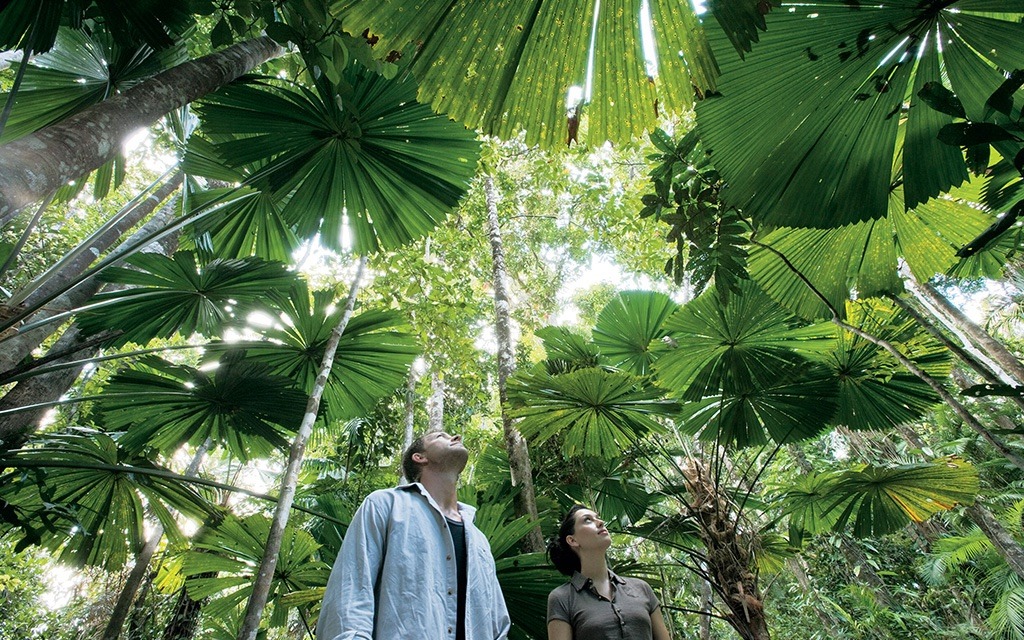
The journey leaves Cairns and heads north along one of the most scenic stretches of coastline in Australia. The route takes in the Daintree River crossing and the spectacular Bloomfield Track, where rainforest tumbles right down to the reef. This is the only place on earth where two World Heritage areas – the Wet Tropics rainforest and the Great Barrier Reef – sit side by side.
Arrival in Cooktown rounds out the day. This historic town is where Captain Cook beached the Endeavour for repairs in 1770, and the local history runs deep. There’s time to settle in before dinner.
Trade tip: The Bloomfield Track is a genuine 4WD experience that signals to clients immediately that this is real touring, not a sealed-road coach trip. Cooktown is an underrated gateway with strong colonial and Indigenous history, and it eases clients into the remoteness ahead.
James Cook Museum & Quinkan Rock Art
The morning explores Cooktown – the James Cook Museum, the botanic gardens, and Grassy Hill, where Cook himself climbed to plot a safe passage through the reef. The views over the river mouth and coast are exceptional.
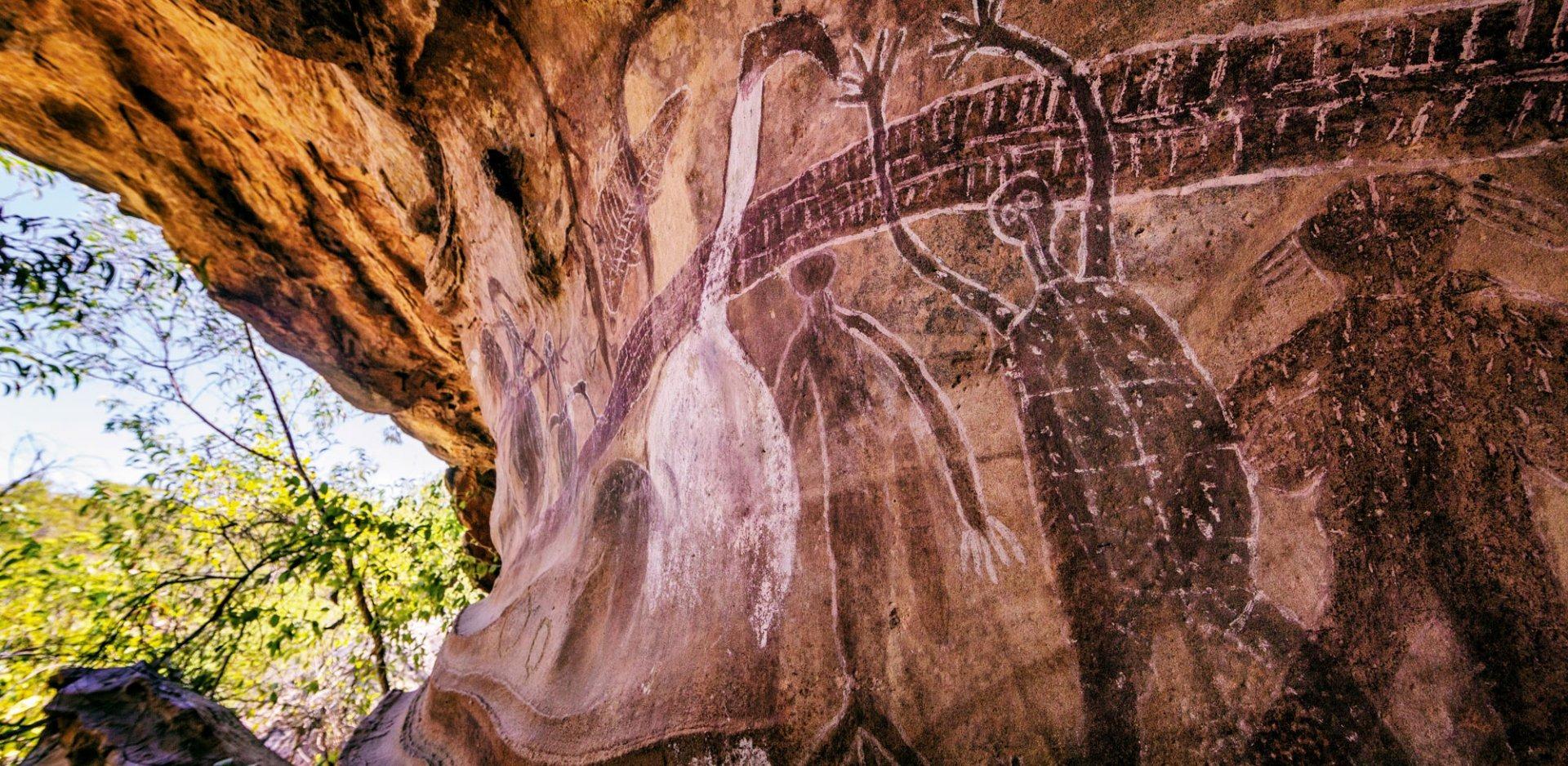
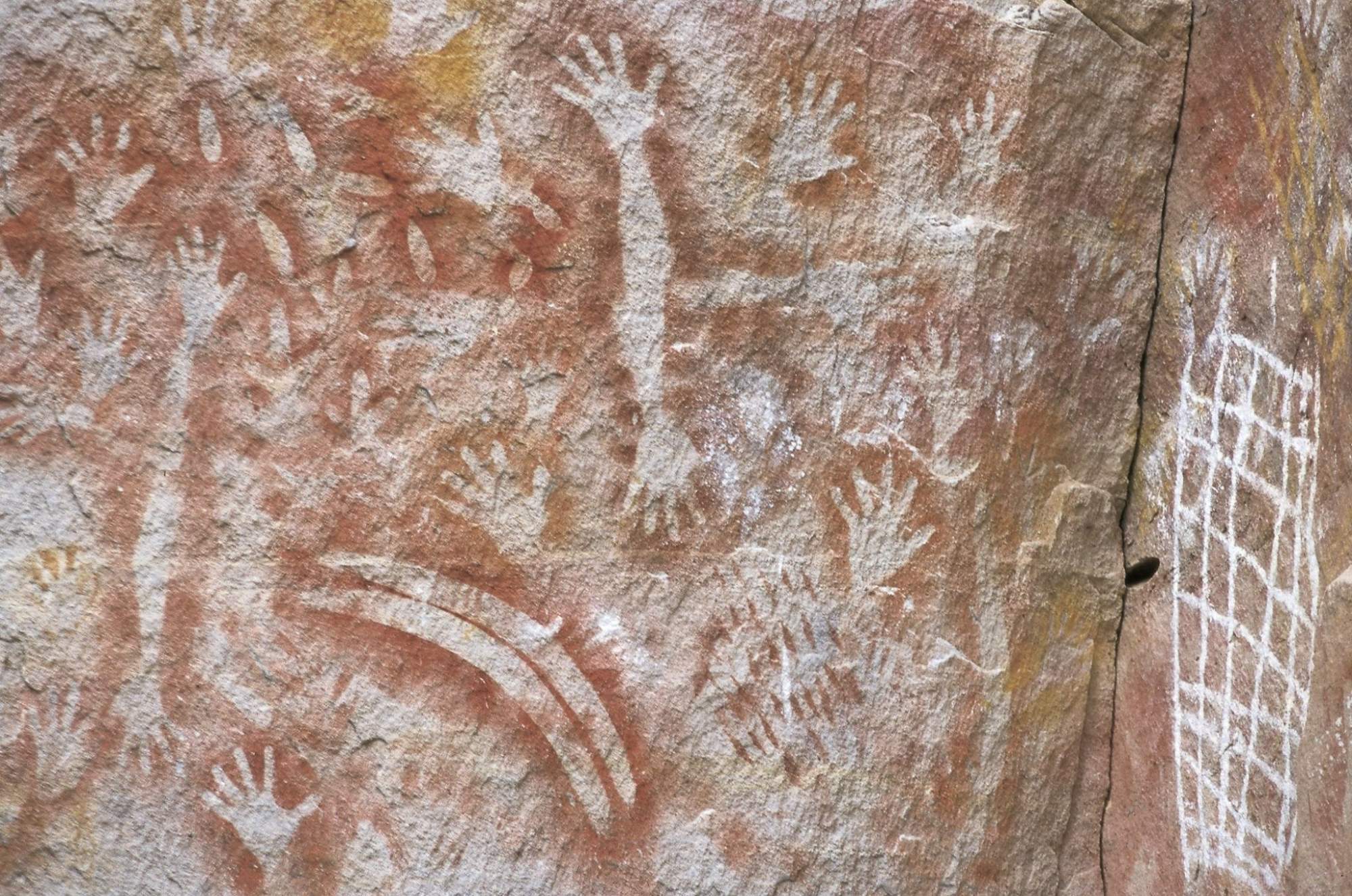
Travelling inland to Laura, the afternoon brings one of the great cultural highlights of the tour. The Quinkan rock art galleries near Laura are among the most significant rock art sites in the world, recognised by UNESCO. Guided by Traditional Owners, guests view ochre paintings of spirit figures, animals, and ancestral beings that have endured for many thousands of years.
Trade tip: The Quinkan galleries are a serious drawcard for culturally curious international clients. Having Traditional Owner guides interpret the art adds authenticity that simply cannot be replicated on a self-drive trip. It’s a highlight worth leading with when selling the tour.
The Peninsula Developmental Road
Today the journey pushes north along the Peninsula Developmental Road, the main artery up the Cape. The landscape shifts into open woodland savannah dotted with termite mounds and grass trees. Stops along the way break up the driving and bring the country into focus.
Musgrave Roadhouse, a former telegraph station, is a classic outback stop with genuine character. The old telegraph line that once ran the length of the Cape tells a story of how this remote region was connected to the rest of the country.
Trade tip: The driving days are part of the appeal here, not a chore to endure. The changing landscape and the sense of getting properly remote is exactly what clients are paying for. The telegraph station history gives the guides plenty to work with along the way.
Across to the Gulf at Weipa
The route turns west towards the Gulf of Carpentaria and the town of Weipa, home to one of the largest bauxite mining operations in the world. The contrast between the heavy industry and the surrounding wilderness is striking.
Weipa sits on a beautiful stretch of coast, and the fishing here is legendary. There’s time to take in the sunset over the Gulf – the western-facing coast delivers spectacular evening colours across the water.
Trade tip: Weipa surprises clients. The Gulf coastline and the sunsets are genuinely beautiful, and the mining operation offers an unexpected angle on remote Australia for those interested in how the country works. A good spot to break the journey before pushing on north.
Telegraph Track Country
Heading back east and then north, the tour reaches Bramwell Station, the northernmost cattle station in Australia. This is the gateway to the famous Old Telegraph Track, the legendary route that follows the original overland telegraph line to the Tip.
Bramwell is a working station with a relaxed bush hospitality all its own. Dinner here is a hearty affair, and the camaraderie that builds among the group really takes hold around this point in the trip.
Trade tip: Staying at a working cattle station is an authentic outback experience that resonates strongly. Bramwell is well set up for guests and the location at the start of the Telegraph Track adds a real sense of anticipation for the days ahead.
Northernmost Point of Mainland Australia
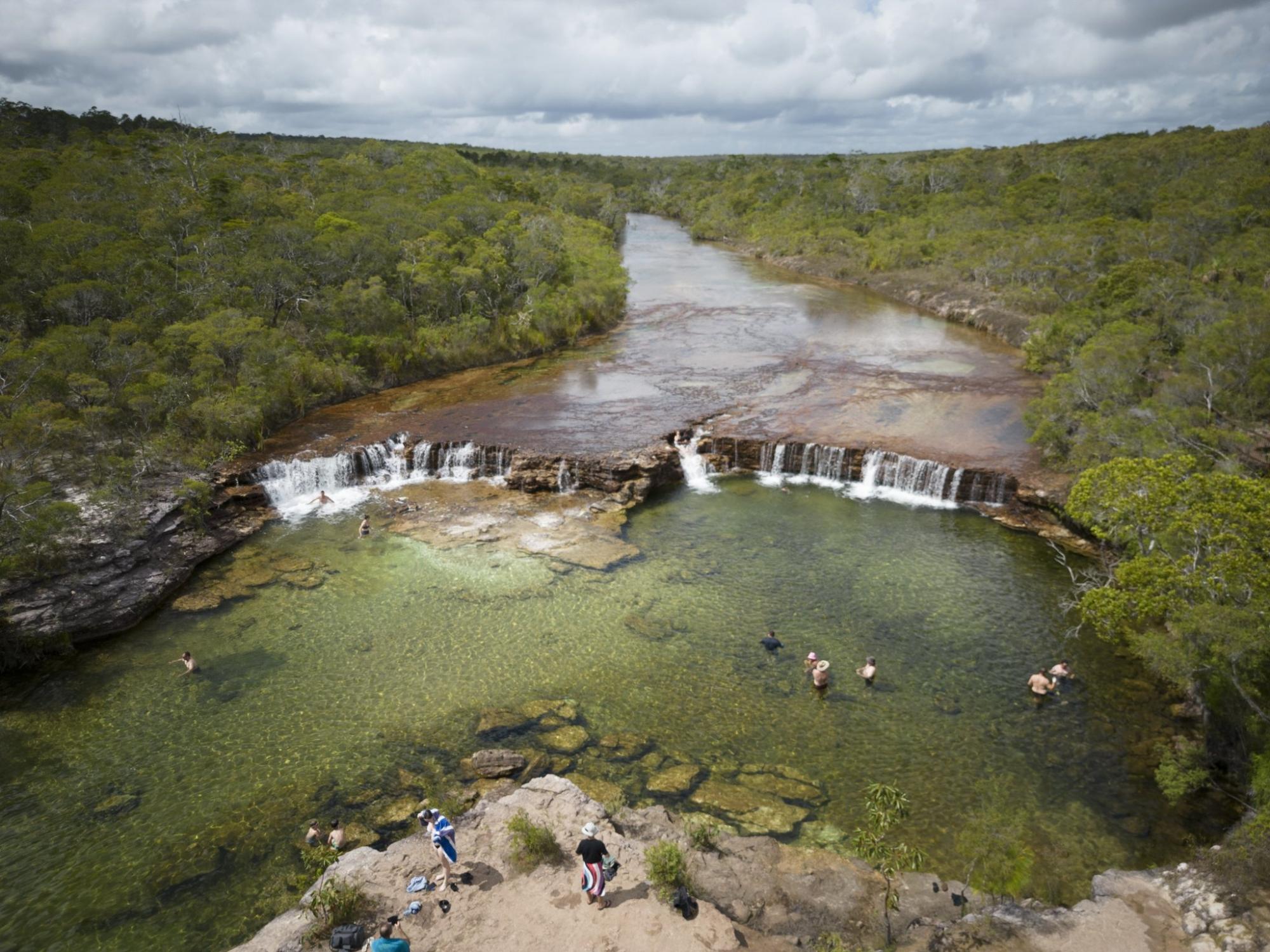
This is the defining day. The journey continues north past Fruit Bat Falls and Eliot Falls, crystal-clear swimming holes set in the heart of the Cape, before pushing on towards the very top.
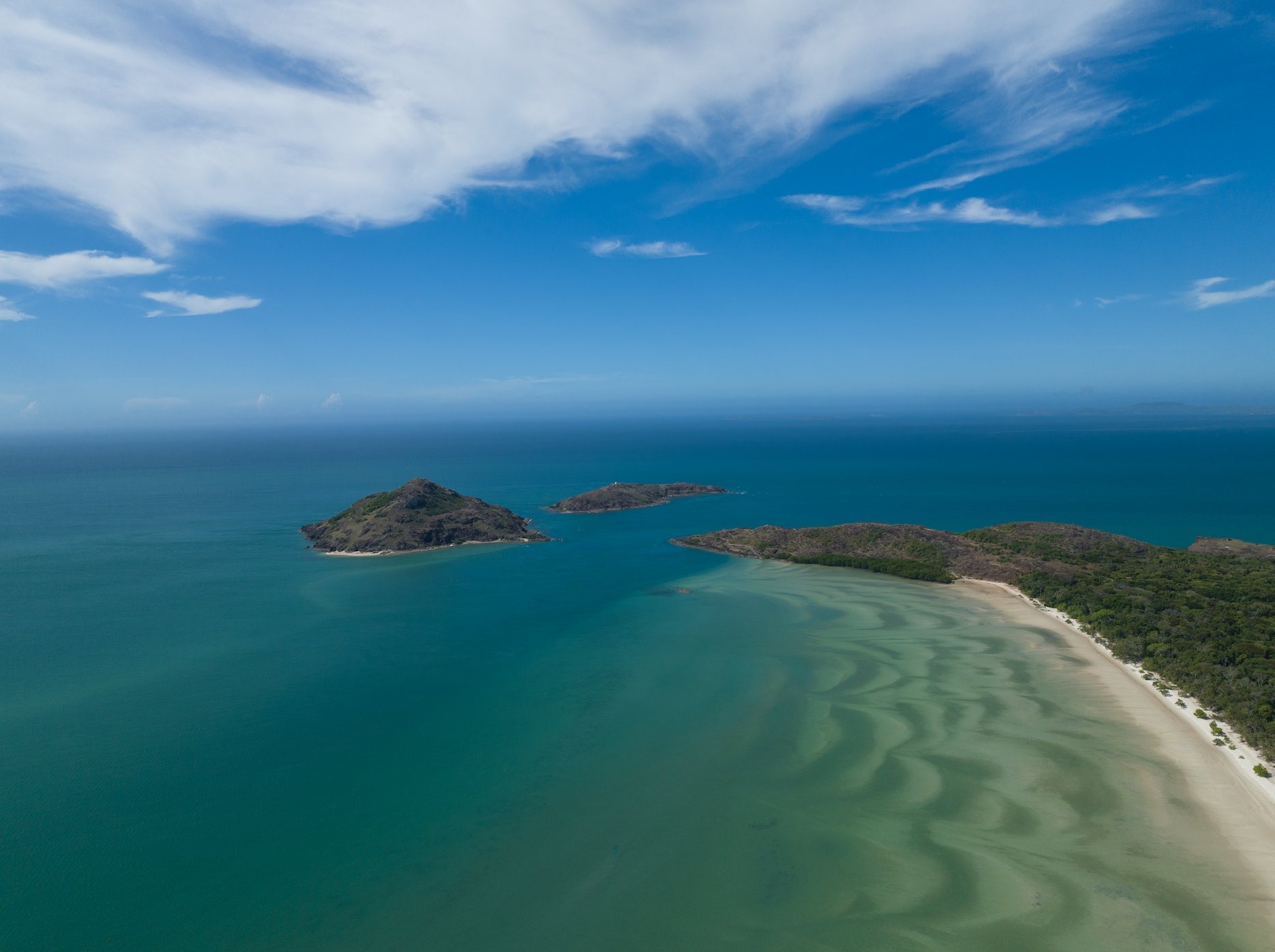
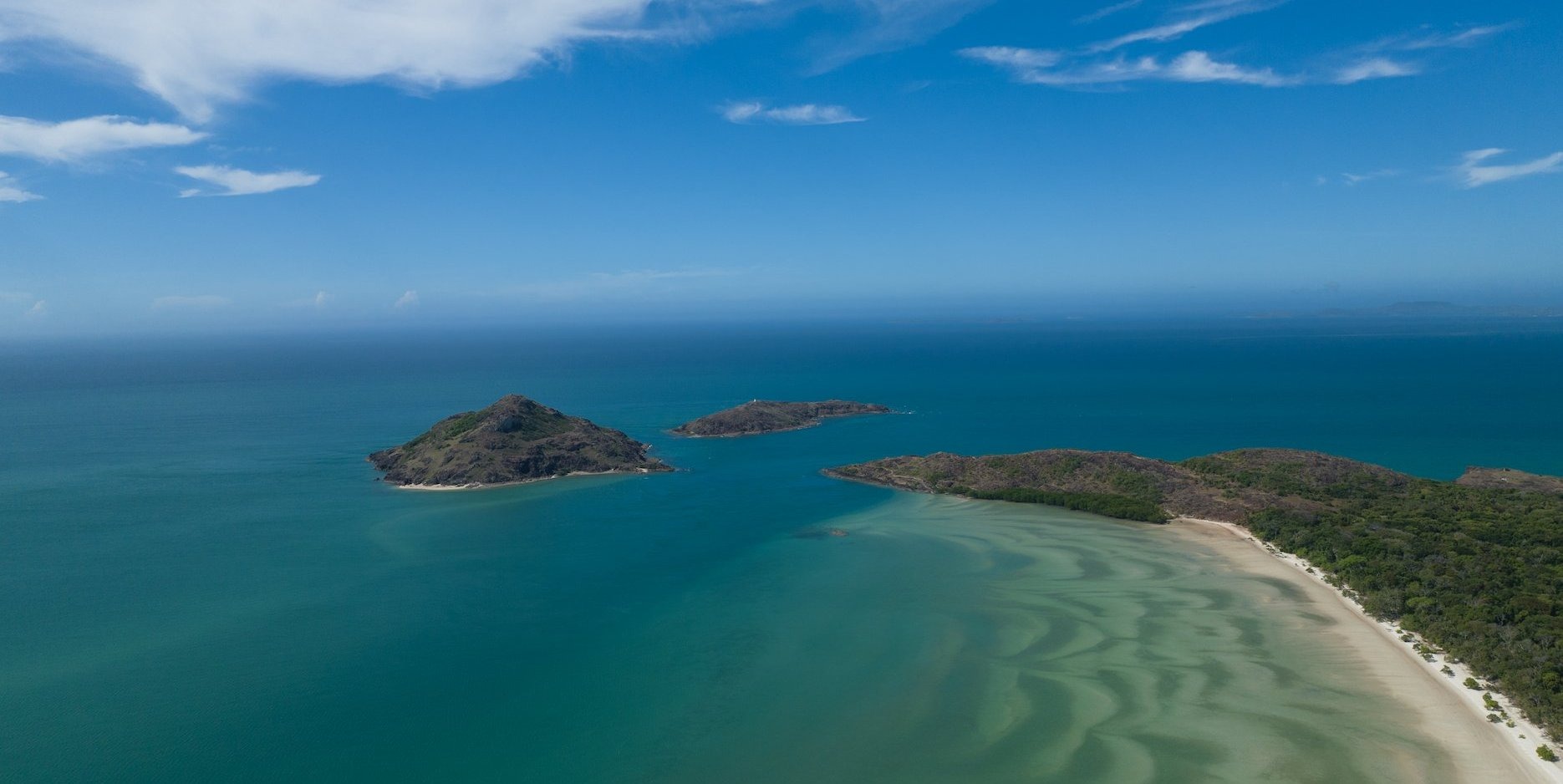
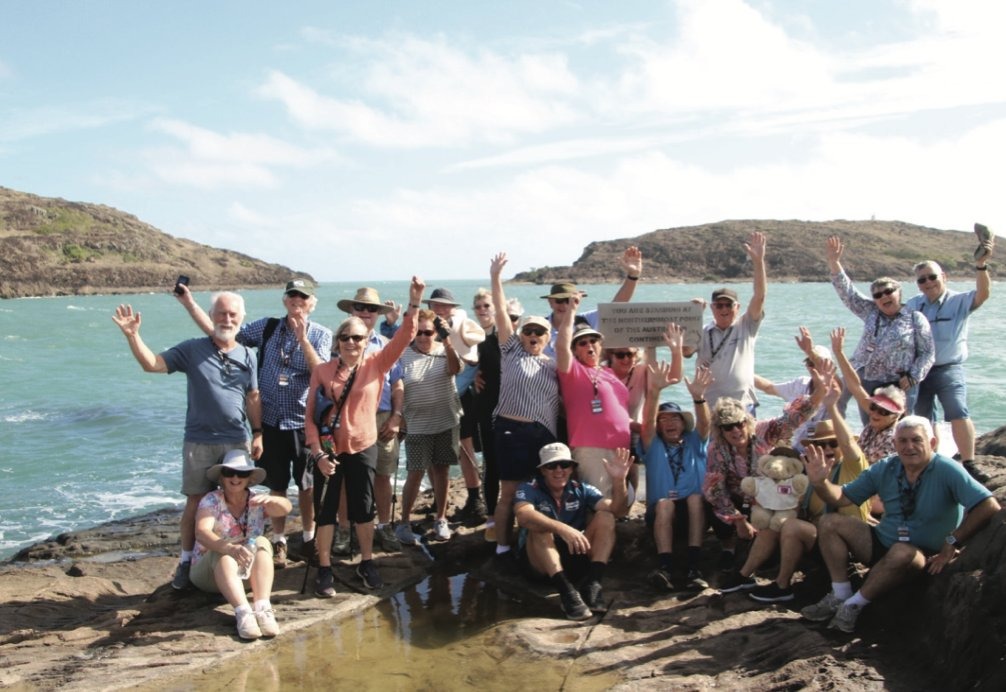
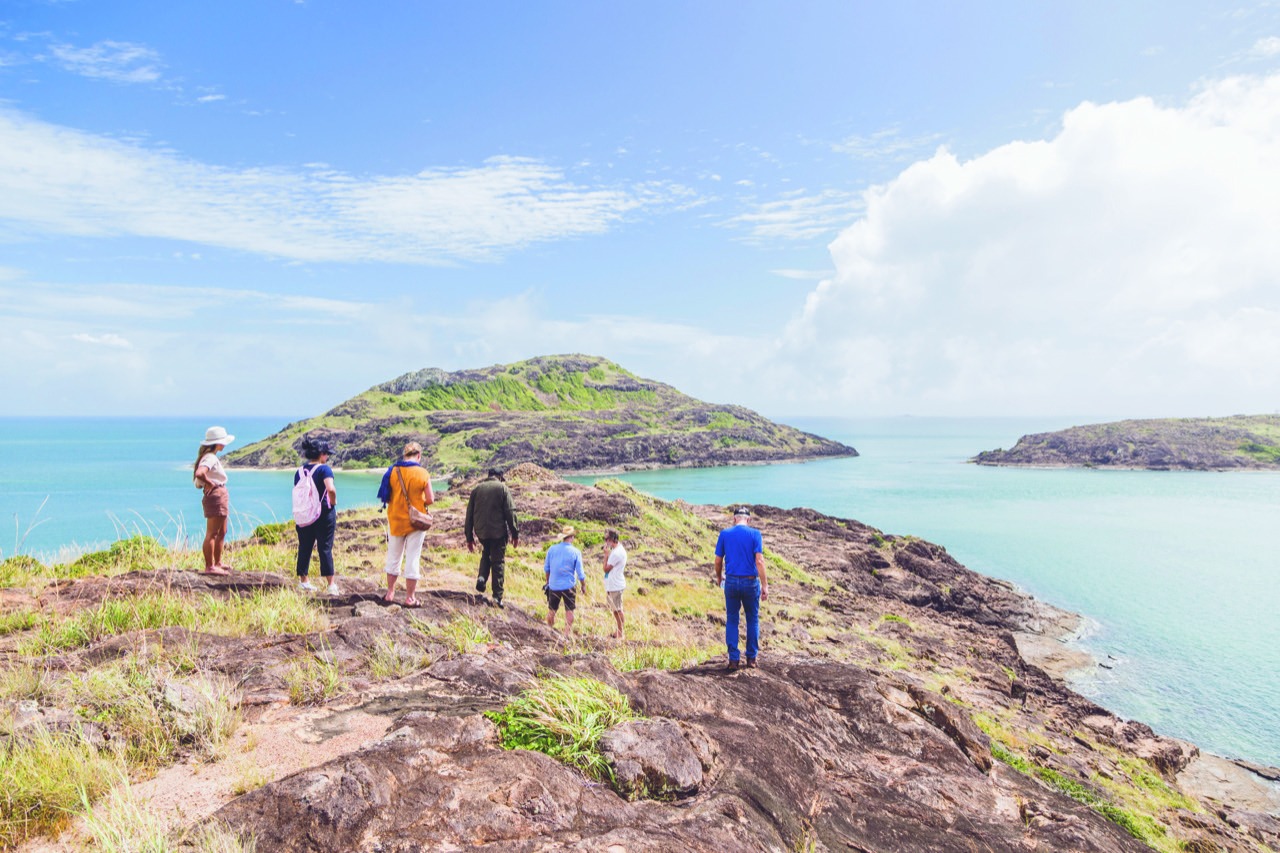
The final stretch involves a short walk over rocky headland to the small sign that marks the northernmost point of mainland Australia. Standing here, with the Torres Strait islands visible across the water, is a genuine bucket-list moment. There’s no fanfare – just the sign, the rocks, the sea, and the satisfaction of having made it.
Trade tip: Reaching the Tip is the hero moment of the whole itinerary. It photographs brilliantly and carries real emotional weight. Make sure clients understand the achievement involved in getting here – it’s the image that closes the sale.
Ferry to the Torres Strait
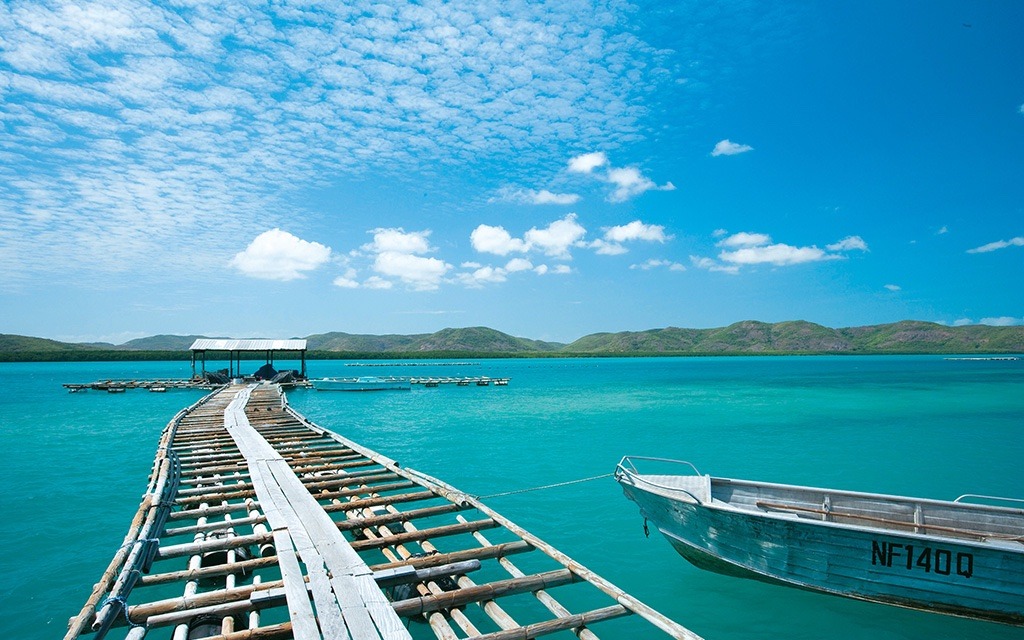
Leaving the mainland behind, the tour transfers to the ferry at Seisia for the crossing to Thursday Island, the administrative hub of the Torres Strait. The island culture here is distinct – a Melanesian heritage shaped by the sea, with a pearling history that drew people from across the world.
A guided tour takes in Green Hill Fort, built to defend the strait, the historic cemetery with its Japanese pearl divers’ graves, and the cathedral. The relaxed island pace is a complete change from the dust and corrugations of the overland section.
Trade tip: The Torres Strait extension is what sets this itinerary apart from a standard Cape York drive. The island culture, the pearling history, and the wartime stories give clients a richer, more rounded experience. It’s a strong selling point for repeat travellers who think they’ve seen Australia.
Wartime History & the Flight Home
A short ferry hop reaches Horn Island, which played a surprisingly significant role in the Second World War as a major Allied airbase and the most heavily defended location in northern Australia after Darwin. The Torres Strait Heritage Museum tells this little-known story powerfully, with wreck sites and gun emplacements still scattered across the island.
After the museum, guests board a flight from Horn Island back to Cairns, watching the patchwork of reefs and islands of the Torres Strait slip away below as the journey draws to a close.
Trade tip: The Horn Island wartime history genuinely surprises clients – very few people know how important the strait was during WWII. The flight back to Cairns is an efficient and scenic way to close the loop, avoiding a long backtrack overland. We can arrange onward connections from Cairns to any Australian destination.
WHAT’S INCLUDED