
COMPLETE ITINERARY
Your Larapinta Trek – Day by Day
Section 1: Alice Springs to Wallaby Gap
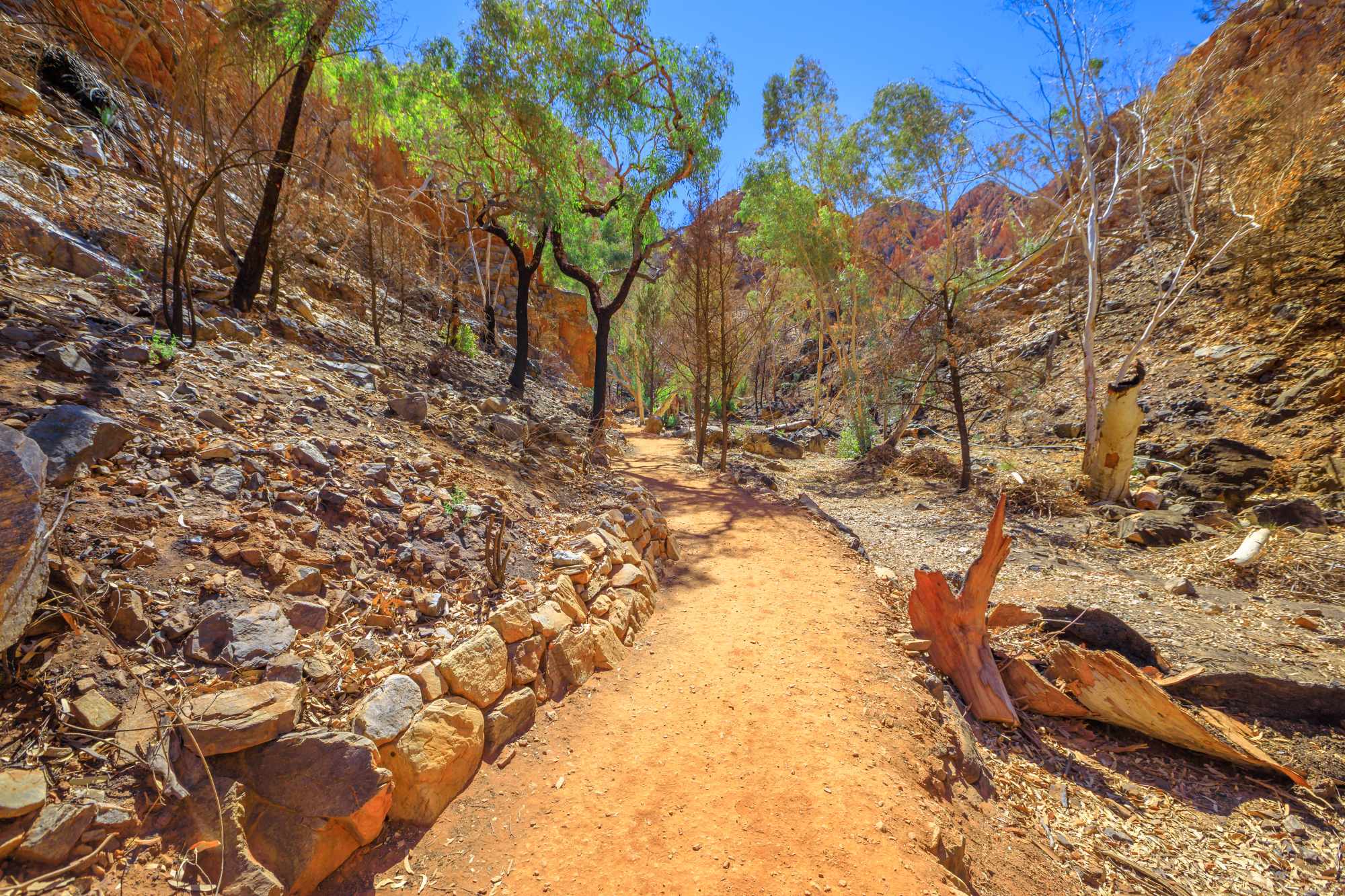
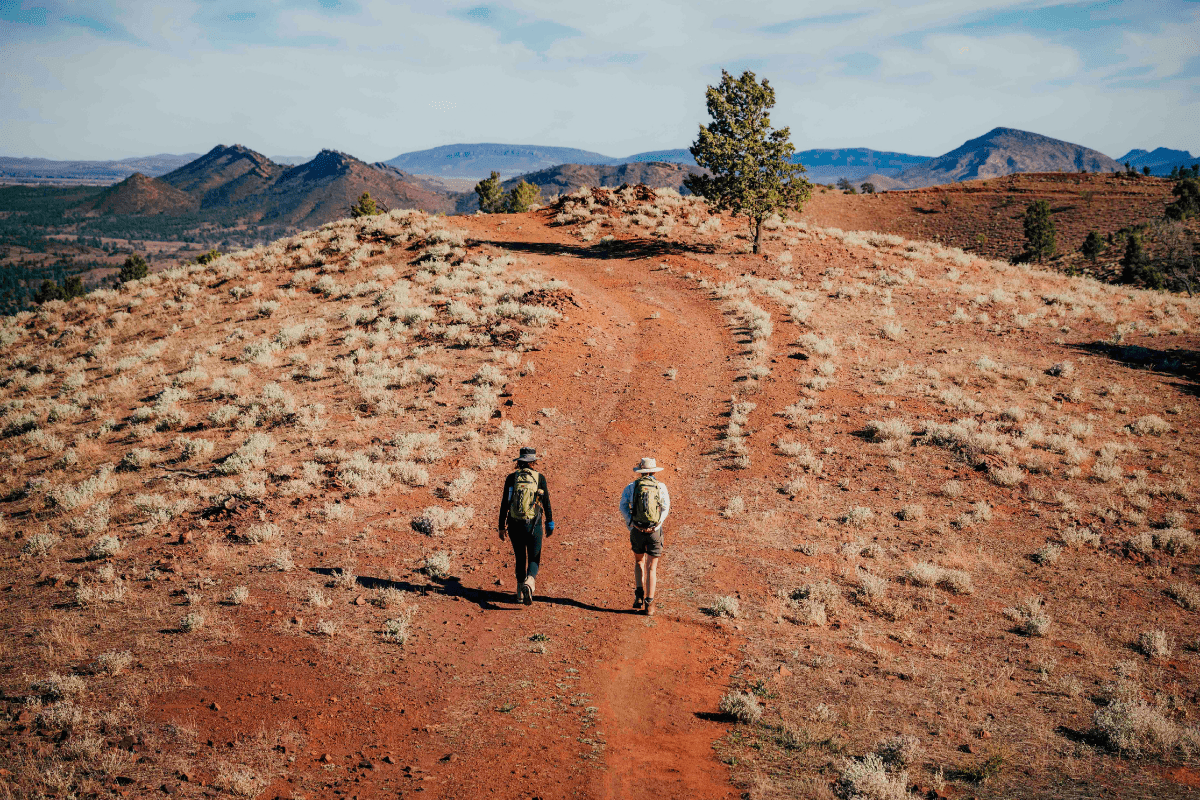
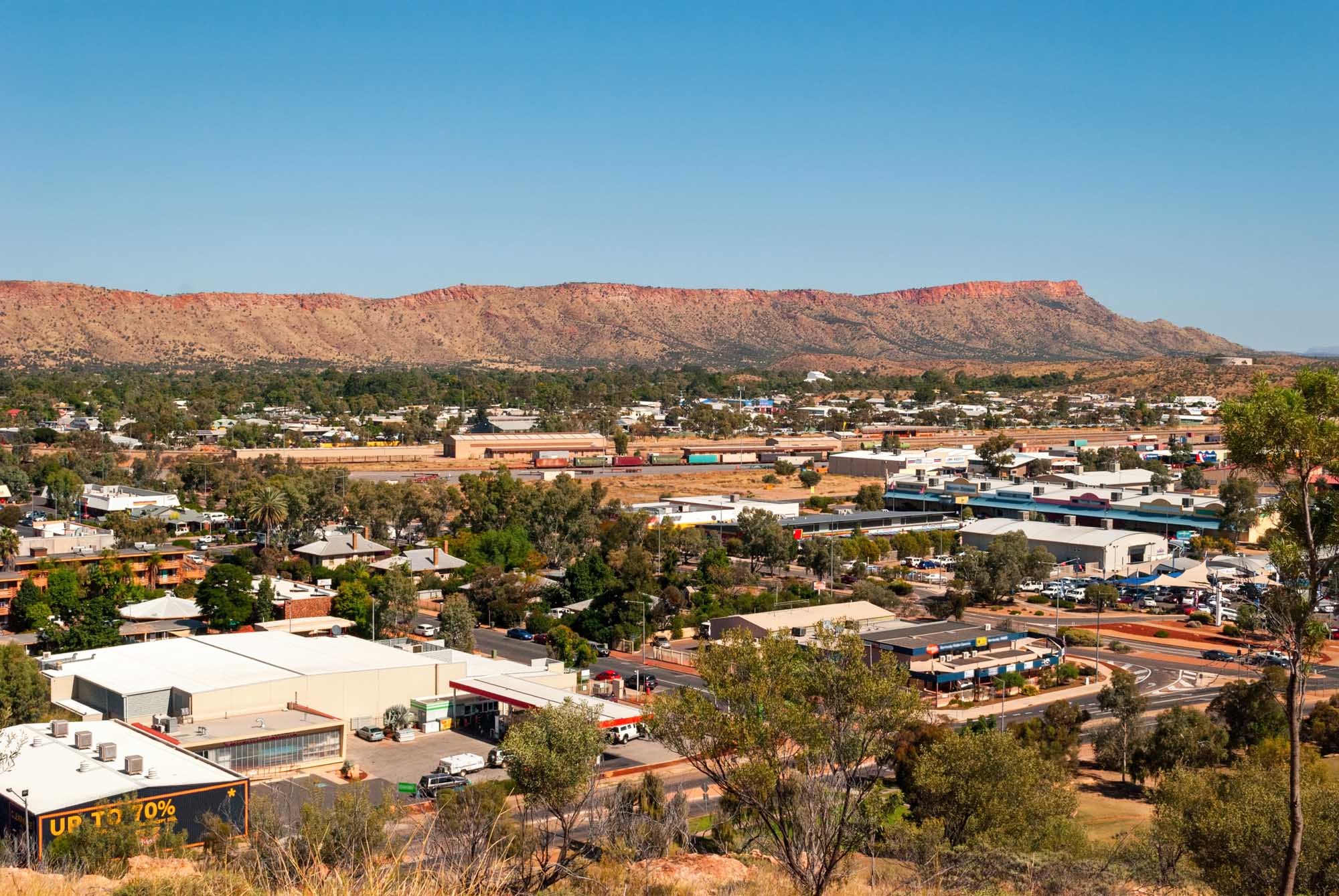
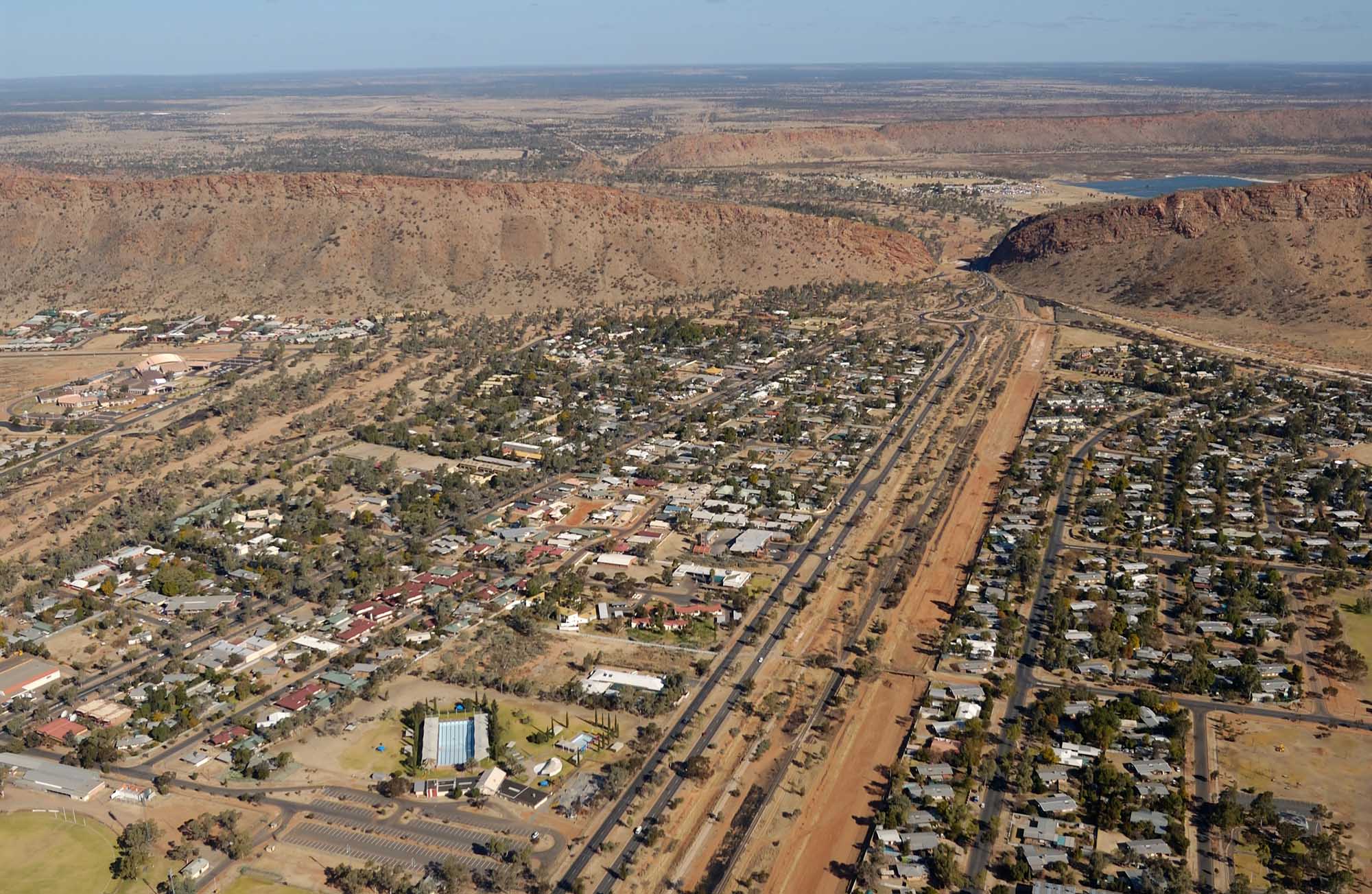
An early pickup from Alice Springs accommodation and it’s straight into the West MacDonnell Ranges. The first walk is a 14-kilometre stretch commencing from the outskirts of town – a deliberate warm-up that lets trekkers settle into the rhythm of the trail and the scale of the landscape. The views from Euro Ridge are the first real reward. Red earth, spinifex, and the ranges opening up ahead.
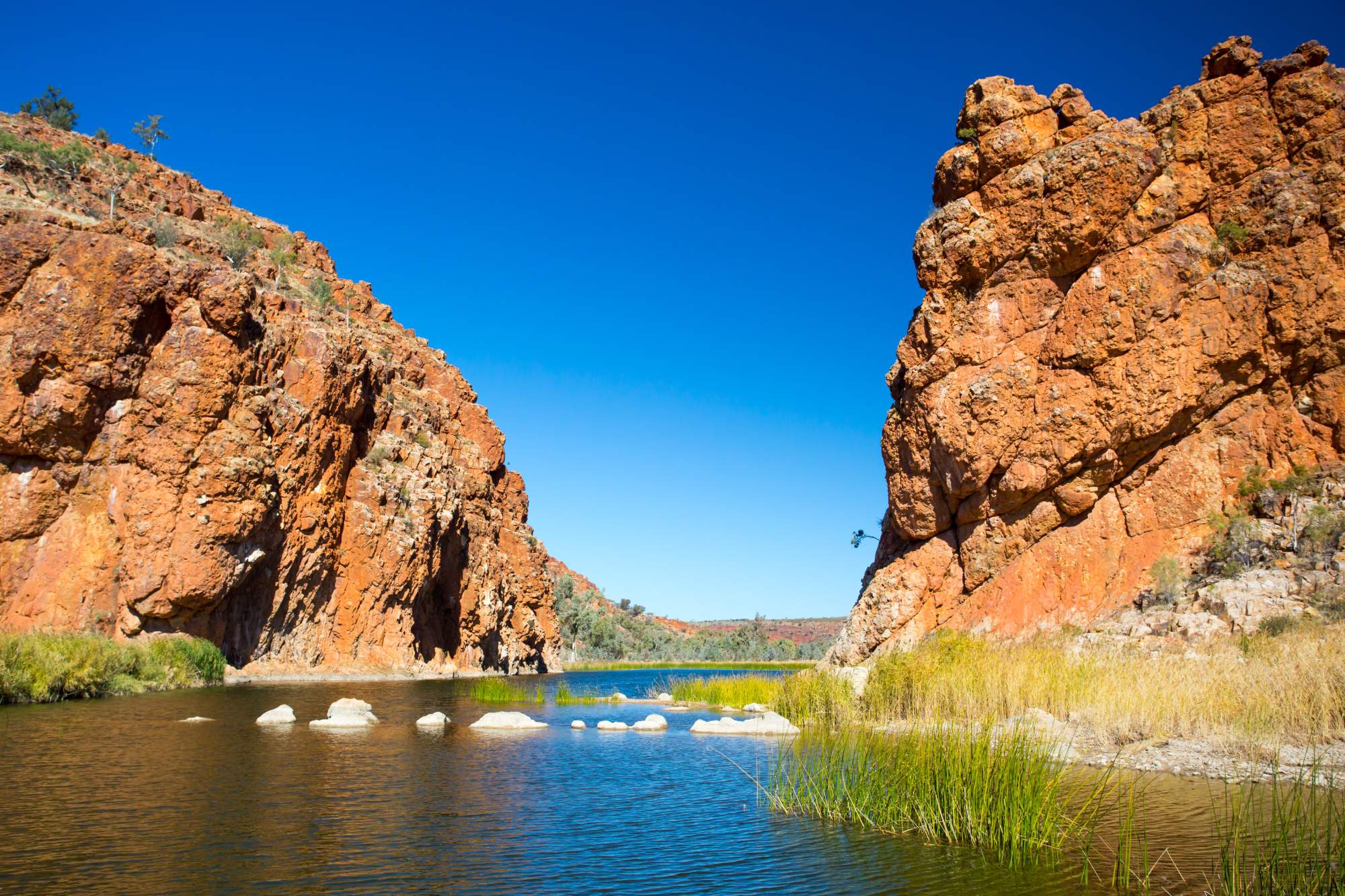
The pace is unhurried. This is about absorbing the country, not racing through it. The ground support vehicle meets the group at picturesque Wallaby Gap and transfers everyone to the private campsite – a remote, permanent setup within the MacDonnell Ranges National Park on traditional Arrernte land. If time allows, there’s a stop at one of the natural waterholes for a swim along the way.
The evening sets the tone for the trip. Pre-dinner is a Kungkas Can Cook tasting platter – an Aboriginal catering company that works with wild-harvested bush foods from the Central Desert region. It’s a proper introduction to the country through its food.
Trade tip: The bush food experience on the first night is a genuine talking point for international clients. It’s authentic, locally owned, and unlike anything they’ll encounter elsewhere in Australia. Worth highlighting in your itinerary descriptions.
Walking: 14 km, Grade 4 (moderate to difficult) | Driving: approx. 146 km
Section 8: Serpentine Gorge to Serpentine Chalet Dam
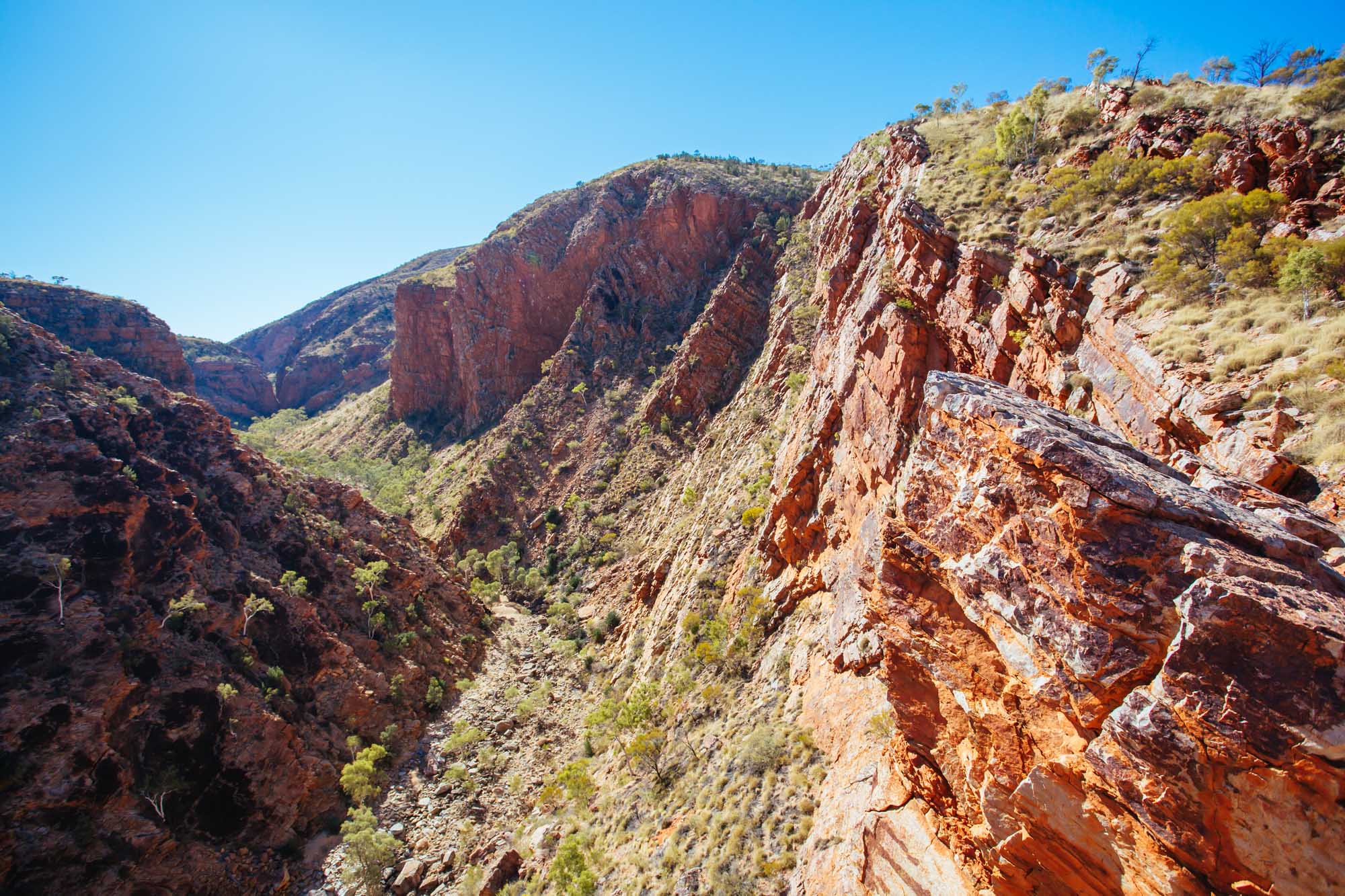
The trek moves into the spectacular western half of the Larapinta Trail. This is a 13.4-kilometre section that demands a solid fitness level – no getting around that. The reward is exhilarating. High quartzite ridgelines that typify the West MacDonnell Ranges stretch out in every direction, with views extending to Haasts Bluff and Mt Zeil, the highest point in the Northern Territory.
The terrain here is exposed and dramatic. Walkers traverse ridgetops with drop-offs on both sides, navigate rocky descents, and pass through pockets of surprisingly lush vegetation tucked into sheltered gullies. It’s the kind of walking where you stop frequently – not because you’re tired, but because the views keep changing.
Back at camp, a swim in one of the natural waterholes (conditions permitting) is the best possible recovery. Dinner around the campfire follows.
Trade tip: This is the most physically challenging day alongside the Mount Sonder climb. Be upfront with your clients about the fitness requirement. Well-prepared walkers will love it. Unprepared ones will struggle. The views from Counts Point lookout at 1,140 metres altitude are worth emphasising – it’s a genuine high-country experience in central Australia.
Walking: 13.4 km, Grade 4 (moderate to difficult) | Driving: approx. 94 km
Section 10: Ormiston Gorge to Glen Helen Gorge
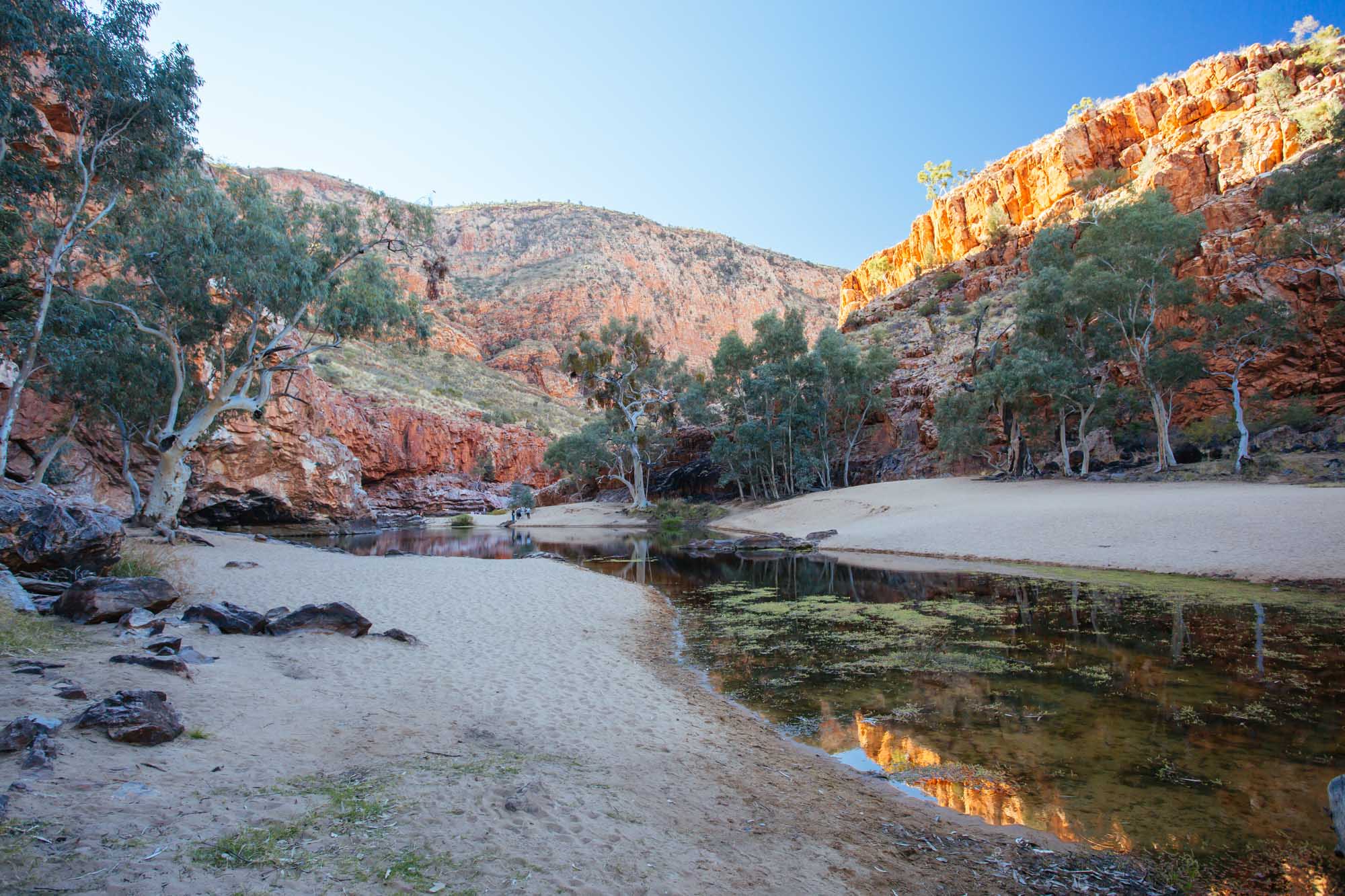
A slightly gentler day at 11 kilometres. The trail traverses the low-lying country surrounding Ormiston Gorge before working gradually upward into the back reaches of the Finke River – one of the oldest river systems on earth. This area carries deep cultural significance, with several important sites along the route including Yapulpa, part of the Carpet Snake Dreaming legend, and connections to the Emu and Kangaroo Man Dreaming.
The guides bring these stories alive in a way that’s respectful and grounded. It adds a layer to the walk that goes well beyond scenery. There’s opportunity for a waterhole swim if conditions are right.
The evening at camp is memorable. The sun drops behind the ranges and the sky shifts through colours that feel almost exaggerated – except they’re not. Sleeping under the stars out here in a swag is something people remember for years.
Trade tip: This is often the day where clients feel most connected to the landscape. The cultural content is a strong selling point, particularly for European and North American travellers who are drawn to Indigenous Australian storytelling. It’s also visually stunning country for photography.
Walking: 11 km, Grade 3 (moderate) | Driving: approx. 27 km
Section 12: Mount Sonder Climb
The alarm goes off at roughly 3 am. Nobody said this would be easy. The 8-kilometre climb to the summit of Mount Sonder – one of the Northern Territory’s highest peaks – begins in the dark. Headlamps on, cool desert air, and the gradual realisation that the sky above is absurdly full of stars.
The payoff at the top is extraordinary. A 360-degree panorama as the sun rises over the MacDonnell Ranges, lighting up the red earth in every direction. It’s the kind of moment that genuinely leaves people speechless. The descent is taken at a relaxed pace, and a cooked Aussie breakfast back at camp has never tasted better.
The afternoon is free. Some people rest at camp. Others head to Ormiston Gorge for a final swim. The last evening under the Milky Way at the remote campsite rounds out the trip’s most demanding – and most rewarding – day.
Trade tip: This is the hero moment of the trek. The sunrise from Mount Sonder is the image your clients will post on social media and talk about at dinner parties for years. The pre-dawn start sounds brutal but the guides manage it well. This day alone justifies the itinerary for adventure-minded travellers. Grade 5 difficulty – make sure clients understand what that means.
Walking: 16 km, Grade 5 (difficult) | Driving: approx. 64 km
Section 9/10: Ormiston Pound Walk to Alice Springs
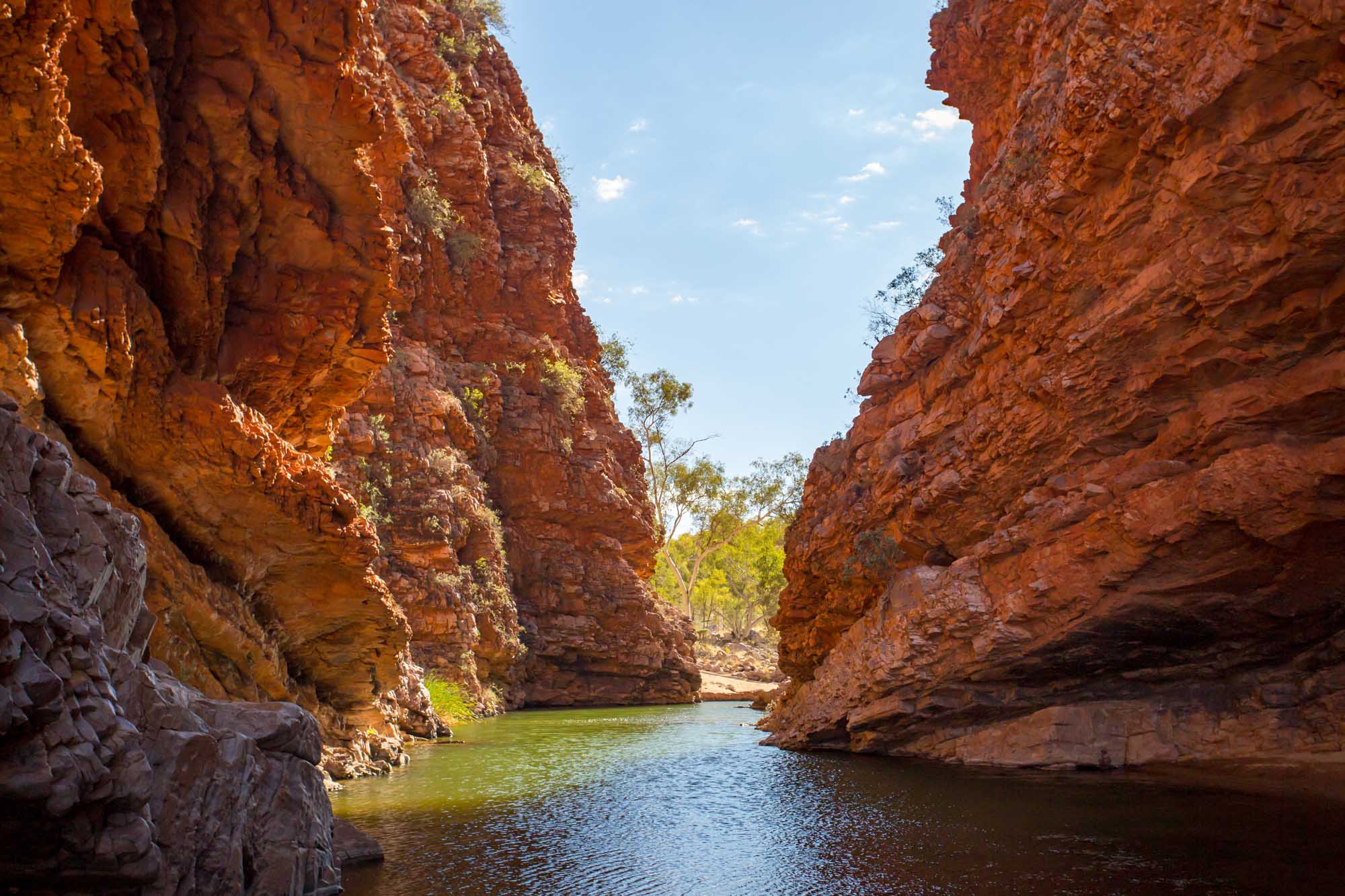
The final day is a fitting send-off. The Ormiston Pound Walk is regarded by many as the best short walk on the entire Larapinta Trail. It’s full of wow factor – dramatic gorge walls, wildlife, diverse flora, and views of the Chewings Range and Mount Giles that inspired artist Albert Namatjira. The entry into the gorge itself is the kind of thing that stops you in your tracks.
After a last picnic lunch at Ormiston Gorge, the group packs up camp for the final time and begins the drive back to Alice Springs. Hot showers and civilisation await. That evening, trekkers make their own way to a local outback restaurant (the guide confirms the details) for a farewell dinner – a chance to swap stories and decompress over a cold drink.
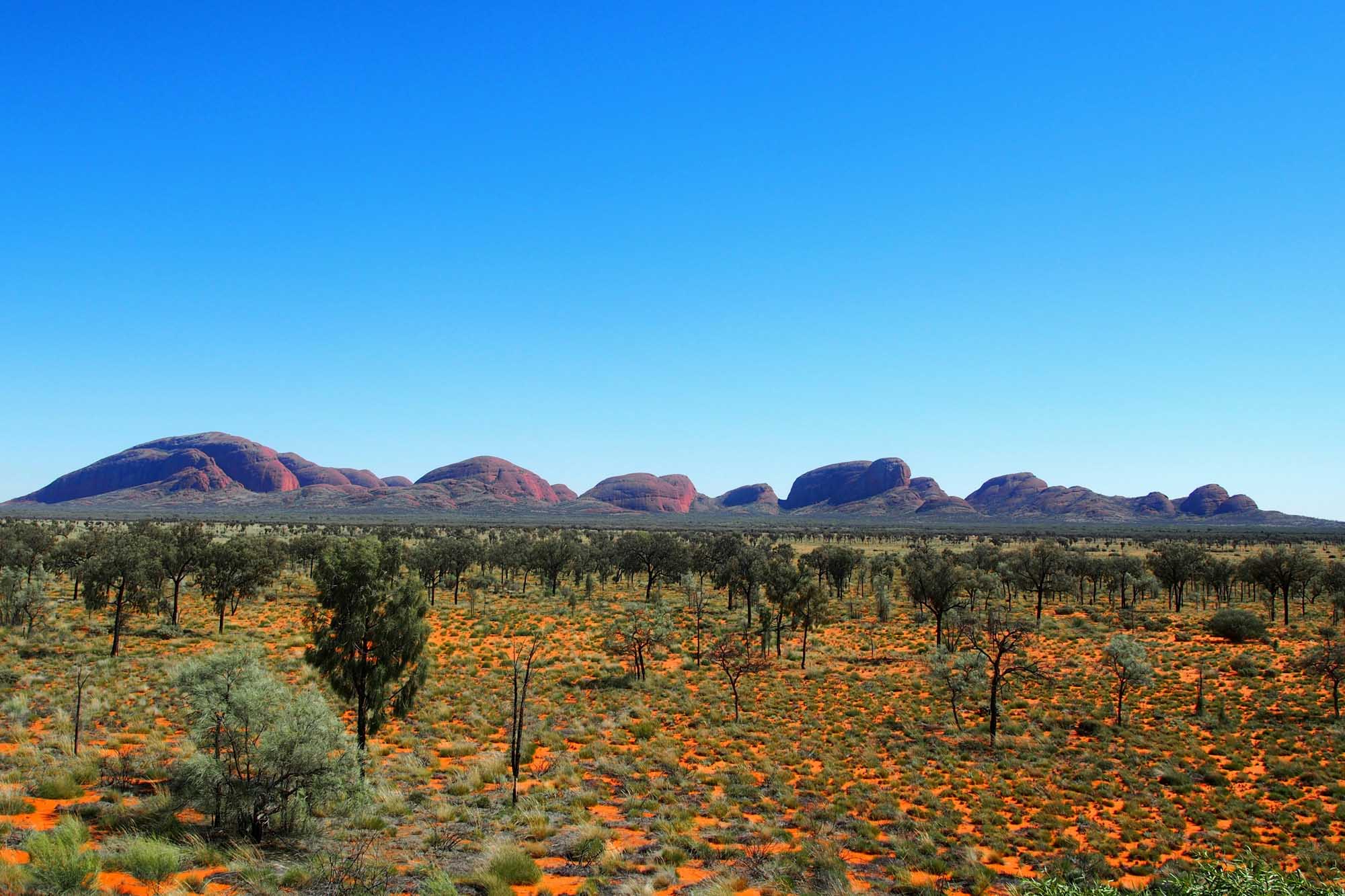
Trade tip: The farewell dinner is not included in the tour cost and clients need to arrange their own transport to the restaurant. We recommend booking Alice Springs accommodation for at least the night of Day 5. This trek pairs brilliantly with extensions to Uluru and Kata Tjuta, Kings Canyon, or onward flights to the Top End, east coast, or the Kimberley. We can build the complete itinerary around it.
Walking: 9 km, Grade 3 (moderate) | Driving: approx. 156 km
WHAT’S INCLUDED