Premium Guided Walking for the Travel Trade

Tasmania Walking Tours

Three signature guided walks across Tasmania’s most remarkable landscapes – the Overland Track at Cradle Mountain, the Three Capes on the Tasman Peninsula, and the Bay of Fires along the east coast. Private huts, expert guides who double as chefs, Tasmanian wine, and some of the most pristine wilderness walking on the planet. Built for travel agents packaging premium Australian experiences, incentive programmes, and Fully Independent Traveller (FIT) itineraries where your clients want something genuinely immersive.

About These Walks

Tasmania’s Signature Walking Experiences

Tasmania is unlike anywhere else in Australia. A compact island state where World Heritage wilderness, ancient temperate rainforest, dramatic coastal cliffs, and pristine white-sand beaches exist within surprisingly short distances of each other. Much of it remains genuinely untouched. The walking here is world-class – not just for the scenery, but for the way these guided experiences are put together.

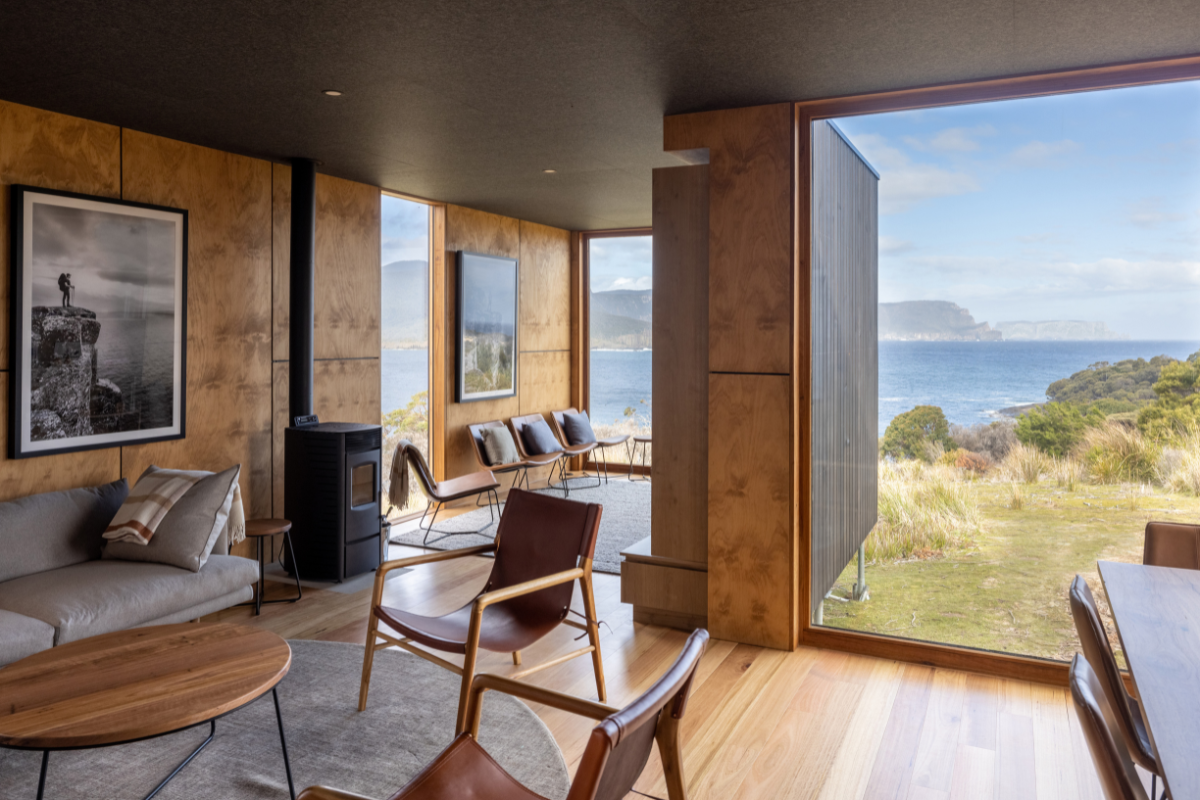
Three signature walks cover Tasmania’s most iconic landscapes. The Cradle Mountain Signature Walk takes the legendary Overland Track over 7 days, retreating each evening to private huts along the trail. The Three Capes Signature Walk explores the towering sea cliffs of the Tasman Peninsula over 4 days. And the Bay of Fires Signature Walk traces the wild east coast beaches over 5 days. Each one pairs serious wilderness immersion with unexpected comfort – hot showers, Tasmanian wine, meals prepared by guides using local produce, and proper beds. For travel agents building premium Australian itineraries, these are the kind of experiences that turn a good trip into an unforgettable one.

  • Three distinct walks – Cradle Mountain (7 days), Three Capes (4 days), Bay of Fires (5 days)
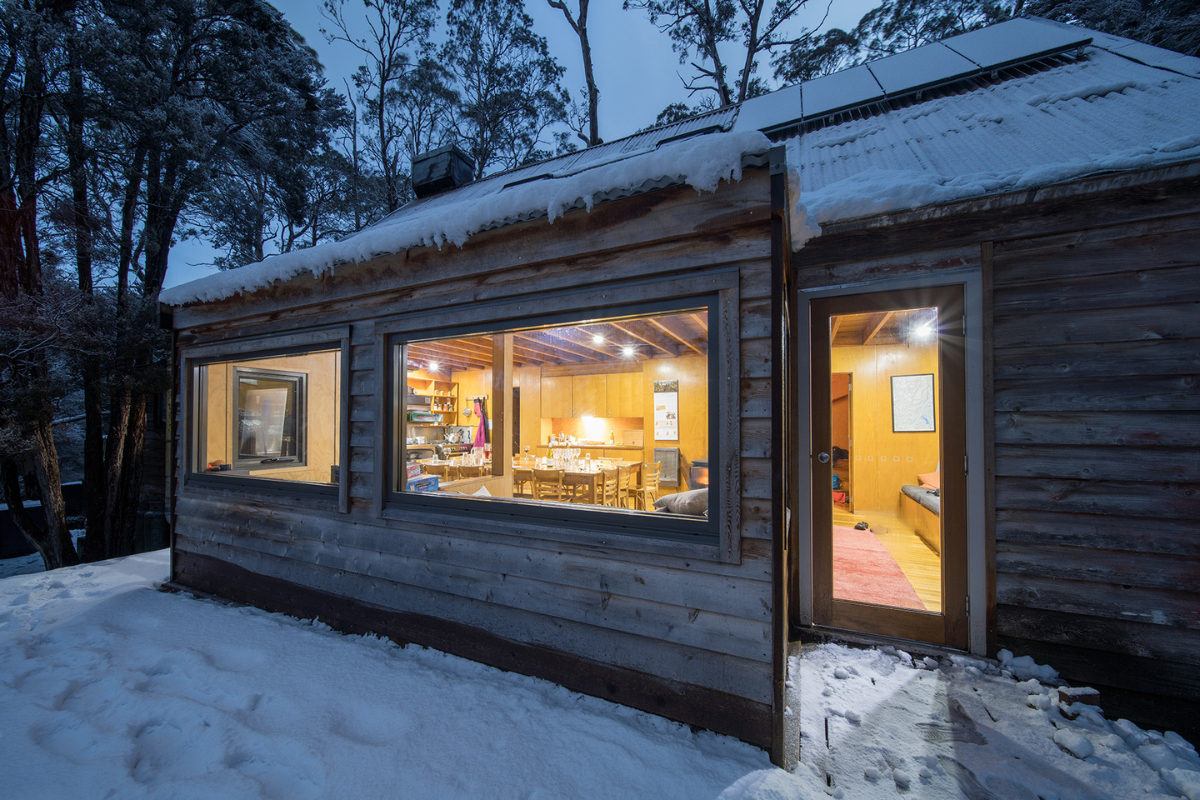
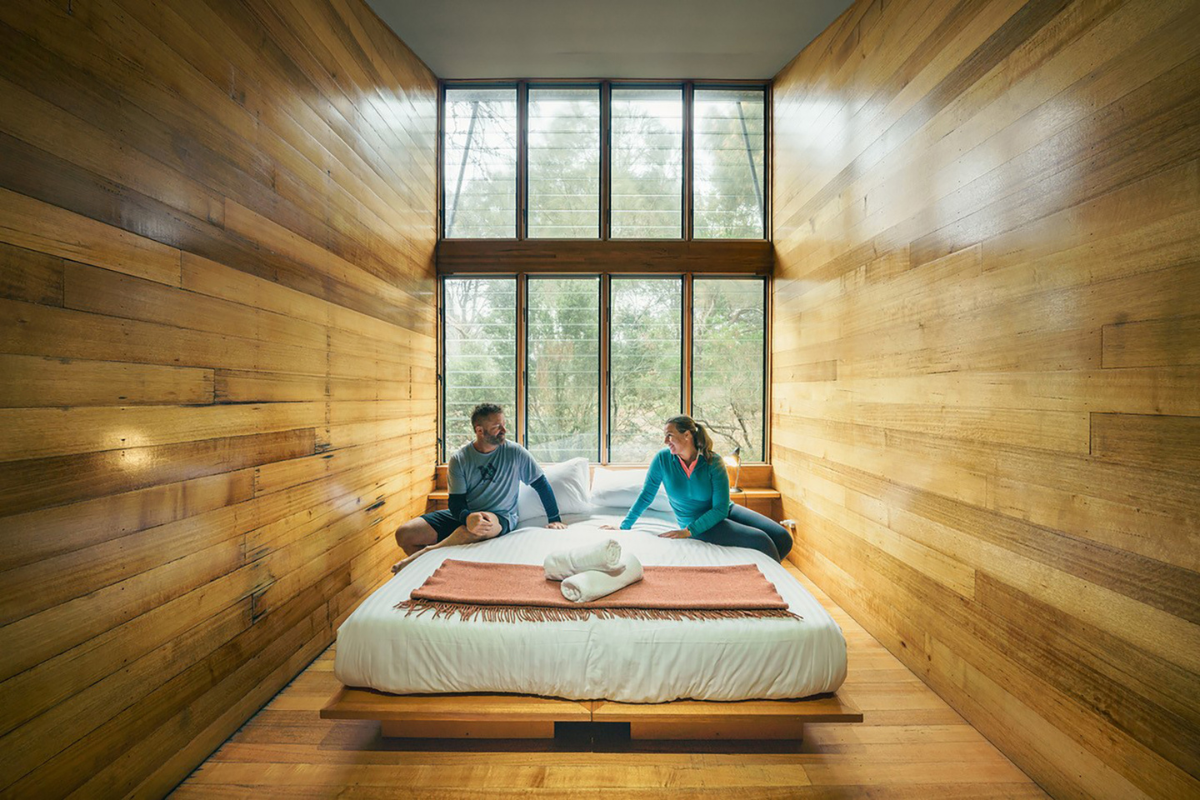
  • Private huts and lodges with hot showers, comfortable beds, and Tasmanian wine
  • Expert guides who lead the walk and prepare gourmet meals from local produce
  • All-inclusive – meals, gear, transfers, national park passes, and accommodation
  • Ideal for luxury FIT, active honeymoons, small group incentives, and milestone celebrations
cradle-mountain-signature-3.png

CRADLE MOUNTAIN SIGNATURE WALK

The Overland Track – Day by Day

Arrive at Red Feather Inn & Walker Briefing

The walk begins the evening before at the historic Red Feather Inn – a purpose-built walker base where guests arrive no later than 5:30pm. There’s time to settle in before the briefing at 6pm, where guides introduce themselves, walk through the next six days, and conduct a gear check.

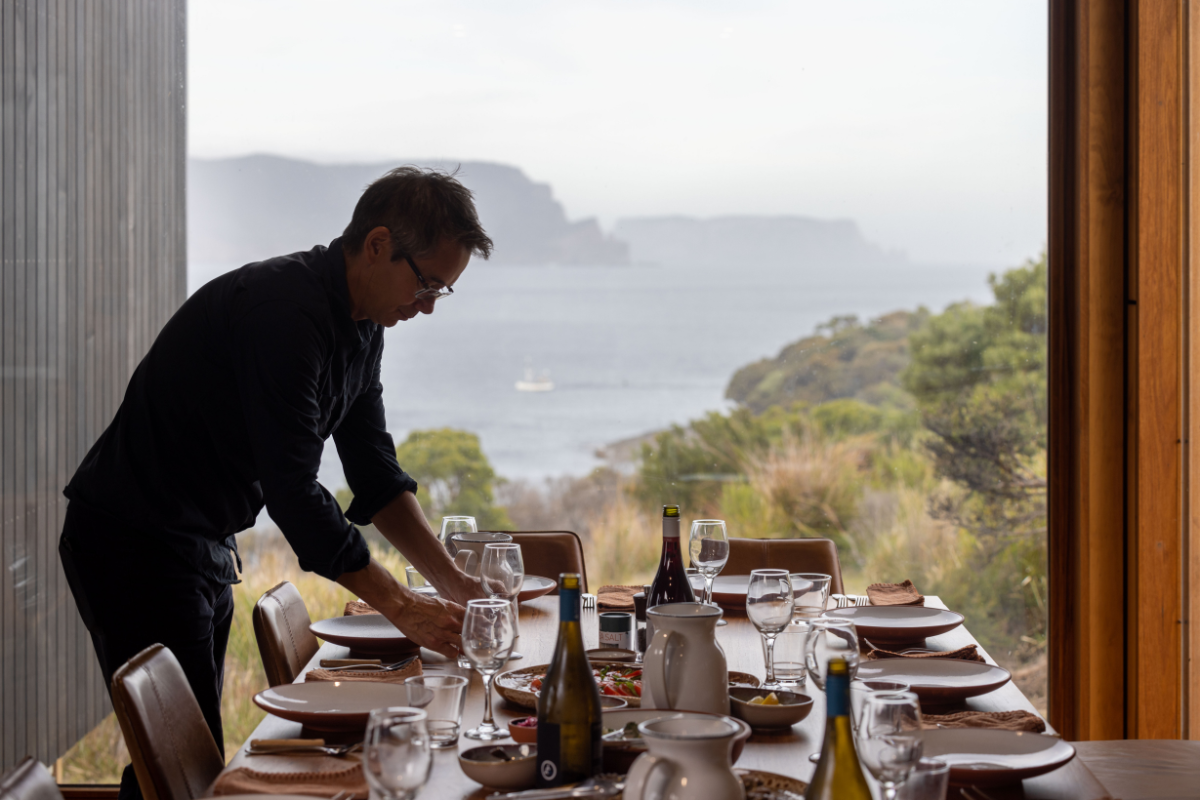
Then the celebration starts. Canapes and wine, a chance to get to know fellow walkers, followed by a formal dinner service built around seasonal Tasmanian produce. The rooms at Red Feather Inn are comfortable and quiet – the perfect excuse for an early night before the early start ahead.

Trade tip: Most guests fly into Launceston. We recommend arriving with time to spare rather than rushing. Red Feather Inn sets the tone beautifully – it immediately signals to clients that this is not a rough-it-in-the-bush experience. The dinner alone is worth highlighting when selling this walk.

cradle-mountain-signature-4.png

Waldheim to Barn Bluff Hut

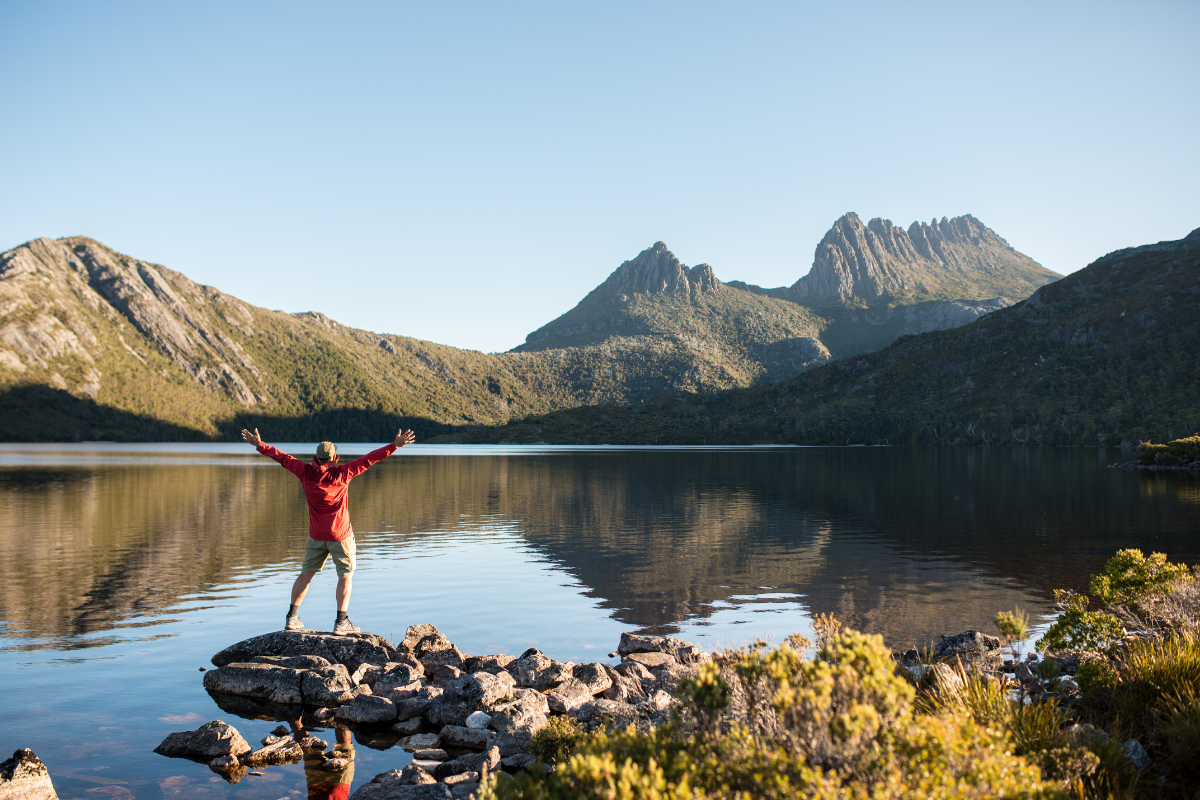
An early breakfast, then the bus to Cradle Mountain – Lake St Clair National Park. The walk begins at Waldheim in Cradle Valley, where the story of Gustav Weindorfer is told. In 1910, standing on the summit of Cradle Mountain, the Austrian-born naturalist proclaimed: “This must be a national park for the people for all time.”

The track passes through ancient temperate rainforest and the dramatic glacially-carved Crater Lake before tackling the steepest section of the entire Overland Track. Reaching Marion’s Lookout at 1,250 metres is the reward – staggering views of Cradle Mountain and Dove Lake in clear conditions. Every uphill step earns it. The route continues around the base of Cradle Mountain along a spectacular glacial cirque before dropping into Waterfall Valley. Barn Bluff Hut waits below the towering peak, a welcome retreat after hours on exposed alpine plateau.

Trade tip: This is the most physically demanding day of the walk due to the elevation gain. Setting client expectations honestly here is important. The payoff is enormous though – Marion’s Lookout is the kind of moment that stays with people. The private hut at the end of the day, with hot food and wine, makes the contrast all the more powerful.

cradle-mountain-signature.png

12km Barn Bluff Hut to Pine Forest Moor Hut

A day of walking across plains where glaciers once rested, slowly scouring out shallow tarns. The track undulates across vast button grass plains fringed by ancient pencil pines. Cradle Mountain and Barn Bluff recede behind. Ahead, Mt Pelion West comes into view.

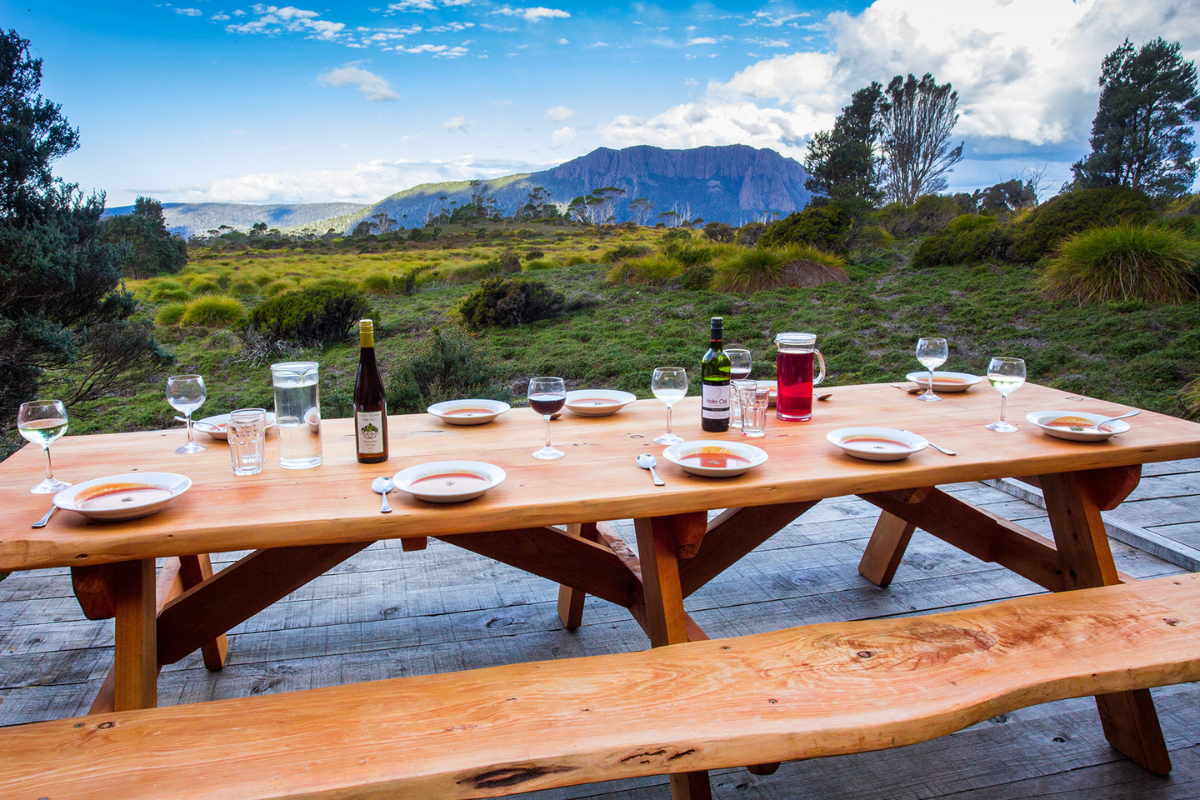
Those looking for a challenge can take the side trip to Lake Will – a striking body of water hugged by pencil pines with a narrow quartzite sand rim. Gravel mounds along the way are remnants of Joseph Will’s coal mining efforts from the 1890s. Further on, Lake Windemere offers a bracing swim for the adventurous. Evening at Pine Forest Moor Hut brings dining with views towards Mt Oakleigh.

Trade tip: This is a good day to highlight when clients ask about variety. The landscape shifts noticeably from the alpine drama of Day 2 to something more expansive and meditative. The optional side trips give fit clients something extra without making the day overwhelming for everyone else.

cradle-mountain-signature-6.png

Pine Forest Moor Hut to Pelion Plains Hut

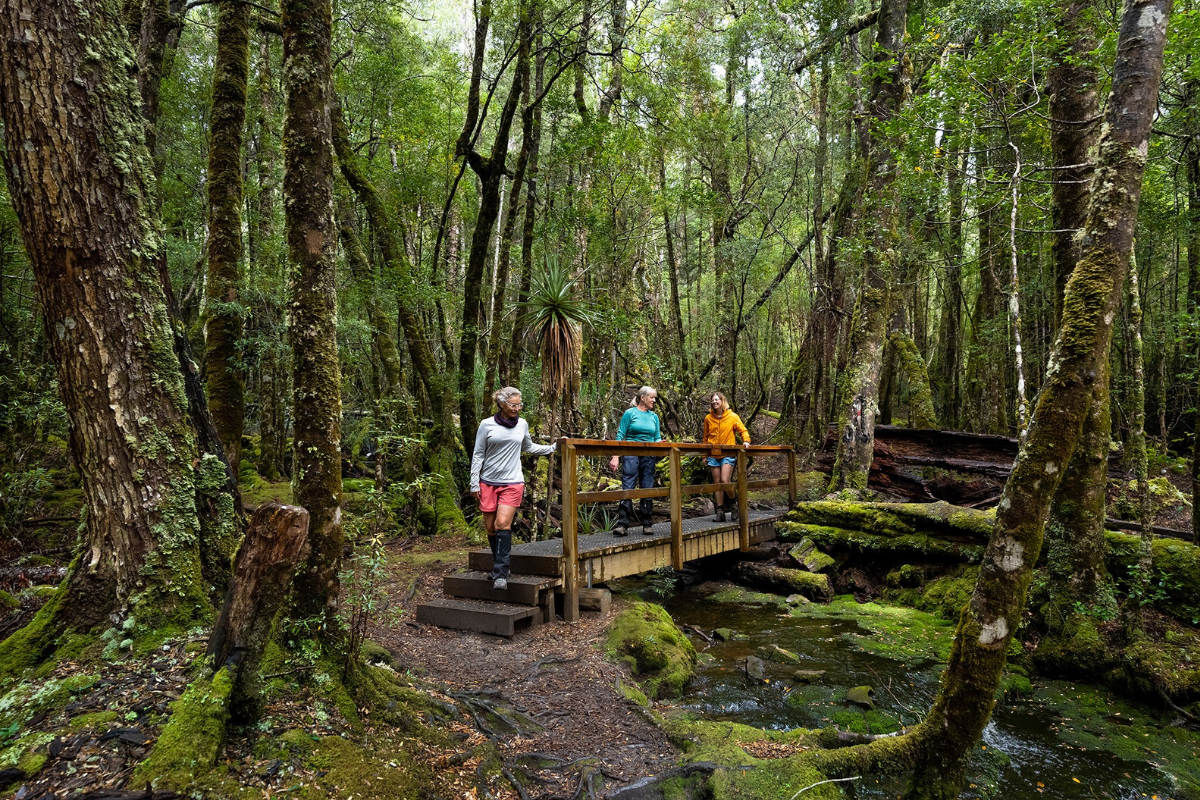
The morning begins in gorgeous myrtle-beech rainforest, descending around the base of Mt Pelion West to the Forth River before it plunges into Lemonthyme Valley. A break at Frog Flats beside the Forth River marks the Overland Track’s lowest point. From there, a gentle ascent back out of the valley as thick eucalypt forest parts to reveal Pelion Plains. Uninterrupted views of Mt Oakleigh’s dolerite spires open up.

The Pelion Plains area offers side trips into mountainous terrain, peaceful spots to rest, and an abandoned copper mine to explore. The hut sits nestled in dry sclerophyll forest.

Trade tip: Pelion Plains has a relaxed feel after the first two walking days. Clients get to explore at their own pace with several optional diversions. The abandoned mine is an unexpected detail that adds historical texture. Good for clients who like their wilderness with a story attached.

cradle-mountain-signature-9.png

7km Pelion Plains Hut to Kia Ora Hut

The day opens with a 300-metre climb to Pelion Gap through beautiful rainforest. The gap is a plateau stretching between Mt Pelion East and Mt Ossa, with views in both directions. This is the day for side trips. The big one: summiting Mt Ossa at 1,617 metres, Tasmania’s highest peak. For those who prefer something less demanding, the Japanese Gardens on the slopes of Mt Doris are a gentler alternative.

From Pelion Gap, it’s roughly two hours of gentle downhill to Kia Ora Hut, where a Tasmanian drop and views out to Cathedral Mountain await.

Trade tip: The Mt Ossa summit is the bragging-rights moment of the whole walk. Standing on the highest point in Tasmania. But it’s optional – clients can keep things relaxed and still have a brilliant day. That flexibility is a genuine selling point. Worth noting that the summit attempt adds significant time and effort, so it suits fitter walkers.

add-a-subheading-300-c397-100px-1400-c397-300px-1900-c397-500px-1900-c397-600px-6.png

Kia Ora Hut to Windy Ridge Hut

Day five is about waterfalls. An hour from Kia Ora sits Du Cane Hut, built in 1910 and still standing from the days of animal trapping. It’s surrounded by native gardens and overlooked by the Du Cane Range. From there, the track passes through some of the oldest forest in the national park – King Billy pines as much as 2,000 years old.

Above the Mersey River, water spills down cliff faces as it descends northward towards Bass Strait. Three major sets of waterfalls are in the area, and the guides choose the best for a lunch stop depending on conditions. The afternoon crosses Du Cane Gap and descends beside the spectacular Falling Mountain to Windy Ridge Hut. This is the last evening on the track, and it’s a celebratory one.

Trade tip: The 2,000-year-old King Billy pines tend to stop people in their tracks. There’s something about standing next to a living thing that old. The celebratory last dinner at Windy Ridge is a highlight – guides pull out all the stops, and it’s often the evening walkers remember most fondly.

istock-174784910.jpg

Windy Ridge Hut to Lake St Clair

The final day heads for Australia’s deepest natural lake – Lake St Clair – shaped by glaciations over two million years. Birdsong accompanies walkers through flowering dry sclerophyll forests to Narcissus at the lake’s northern end, arriving in time for lunch. Then a 17km cruise boat journey across Lake St Clair to Cynthia Bay. There’s typically an hour at the Visitor Centre before the return trip to Red Feather Inn through the highland lakes region, descending the rugged Western Tiers.

Trade tip: The boat cruise across Lake St Clair is a lovely way to finish. After six days on foot, sitting on a boat crossing Australia’s deepest lake feels earned. The return drive through the highland lakes is scenic and relaxed. Return transfers to Launceston are included. We can arrange onward connections to Hobart, the east coast, or flights out of Tasmania.

A hiker wearing a brown hat and backpack stands on a rocky outcrop surrounded by native vegetation, gazing out toward a dramatic mountain range. The landscape features distinctive plateau-like mountain formations under a partly cloudy sky, characteristic of a tropical highland environment.

THREE CAPES SIGNATURE WALK

Tasman Peninsula – Day by Day

Hobart to Crescent Lodge

Groups meet at the walkers base at 164 Murray Street, Hobart at 9:30am for a gear check and briefing, then depart for Stewarts Bay. At 1pm, a private boat cruises across to Denman’s Cove with views back to Port Arthur – and some of the highest dolerite cliffs in the Southern Hemisphere come into view. A short wade ashore signals arrival. Clients should wear shorts or trousers that can be rolled above the knees for this bit.

Lunch is served on the beach using local produce, then a gentle walk through coastal woodland to Surveyors Cove and up to Crescent Lodge – perched high with sweeping views across Crescent Bay to Cape Raoul. Guest rooms spill into the gully. A warm shower, a three-course dinner of local fare, and a glass of Tasmanian pinot on your own private deck as the sun drops.

Trade tip: The boat arrival is a strong opening. Clients get a sense of the drama immediately – those cliffs are genuinely imposing. Crescent Lodge sets the standard for what’s to come. The private sunset deck moment is the kind of detail that sells this walk to discerning travellers.

11km Crescent Lodge to Cape Pillar Lodge

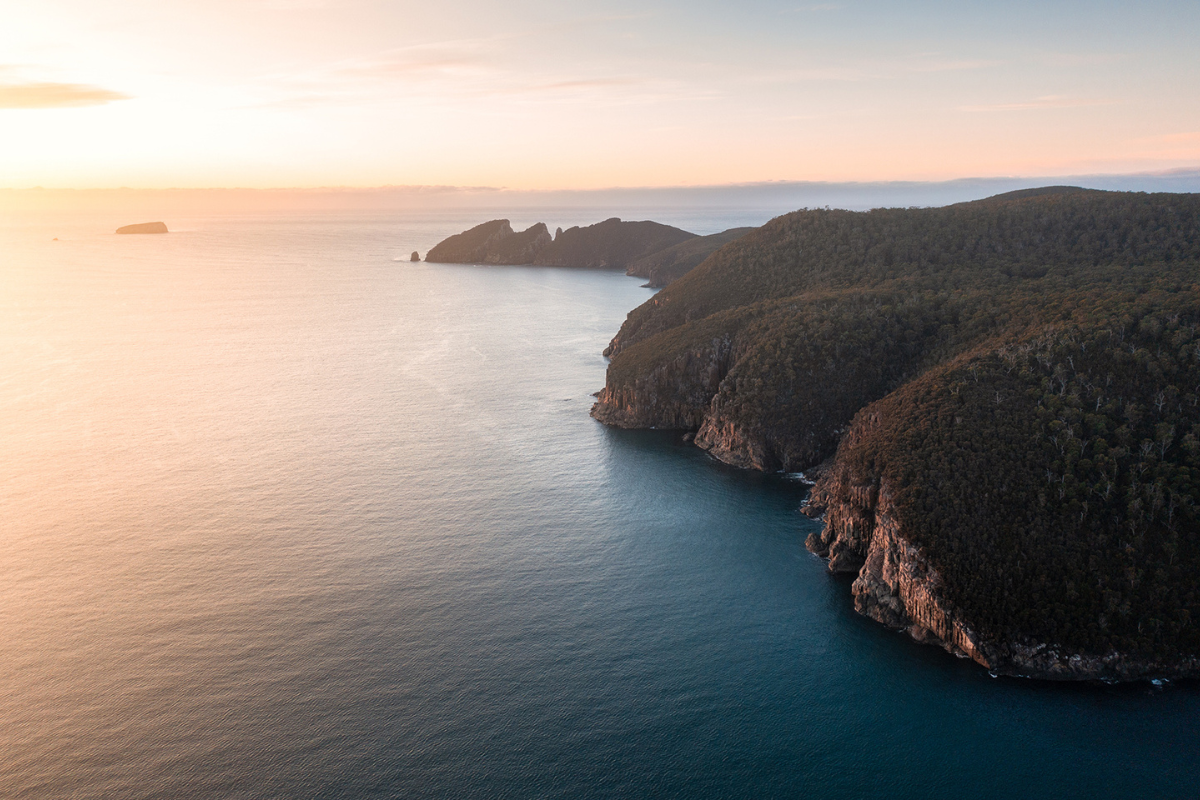
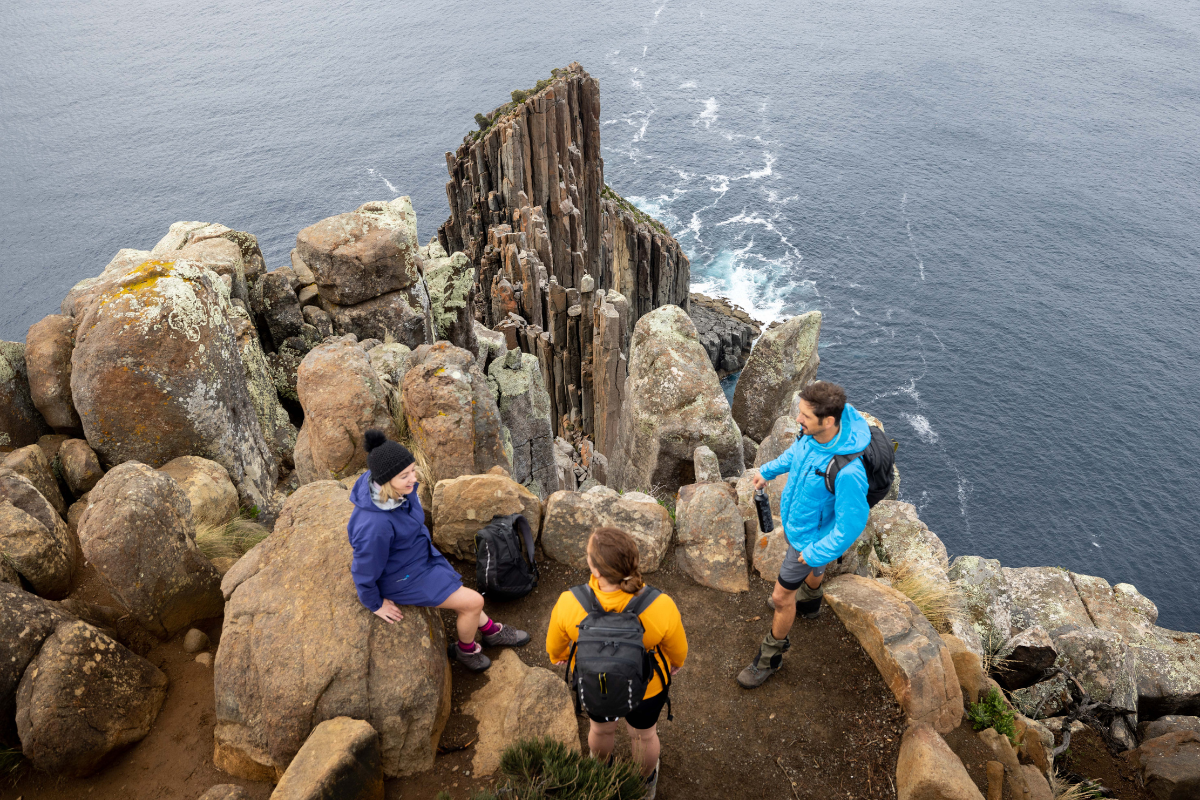
After breakfast at Crescent Lodge, the track heads due south with views across Safety Cove and Maingon Bay to Bruny Island. Climbing Arthurs Peak at 300 metres above sea level earns an oceanic vista. White-bellied sea eagles soar in the thermal currents overhead.

Lunch on south-facing cliffs where pelagic seabirds fill the sky – albatross, petrels, gannets. Nothing between you and Antarctica. Then skirting the edge of Tornado Ridge before arriving at Cape Pillar Lodge, the base for the next two nights. A massage or facial is available on arrival for those who want it.

Trade tip: The “nothing between you and Antarctica” line is not an exaggeration – it’s a powerful selling point. Cape Pillar Lodge offers spa treatments, which adds a luxury dimension that differentiates this from standard multi-day walks. Two nights at the same lodge means clients can settle in properly.

An aerial view of a scenic causeway connecting Bruny Island to Tasmania, featuring a winding coastal road flanked by pristine sandy beaches on one side and calm bay waters on the other, with forested hills and distant coastline visible under clear blue skies.

18km Cape Pillar Lodge Return

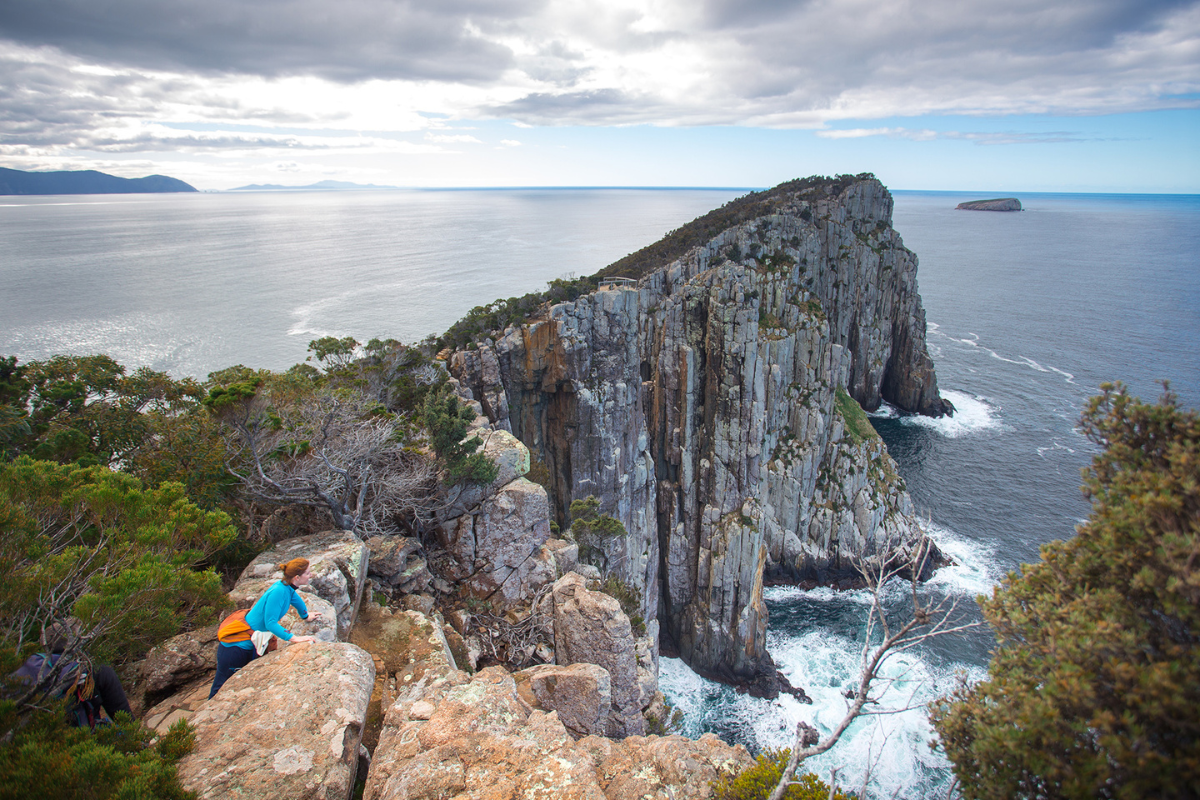
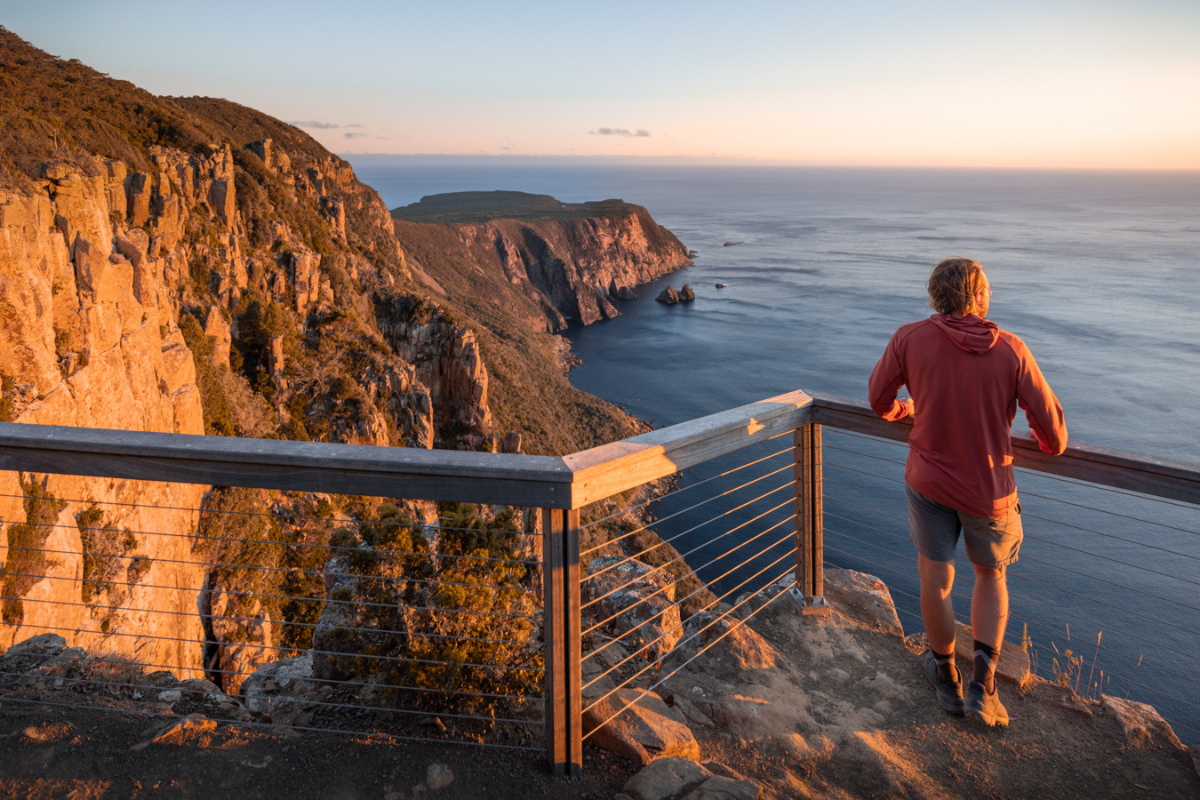
The most adventurous day. The track passes through silver peppermint forest – a species endemic to the area – out to the highest sea cliffs in the Southern Hemisphere. Cape Pillar has earned names like Hurricane Heath and Desolation Gully. A side trip to The Blade delivers staggering views across to Tasman Island. Lunch at Chasm Lookout with the weathered lighthouse of Tasman Island in sight.

The return to Cape Pillar Lodge brings the relaxation pavilion, a hearty meal, ocean views, and wine. By now, walking strangers have often become firm friends. Those preferring to skip the walk can spend the day at the lodge enjoying 30-minute spa treatments instead.

Trade tip: This is the hero day of the Three Capes walk. The sea cliffs are genuinely extraordinary. The spa-day option for non-walkers is worth mentioning to couples where one partner is more active than the other – it makes the product bookable for a wider range of clients.

istock-1224977860.jpg

18km Cape Pillar Lodge to Fortescue Bay

The final day crosses Retakunna Creek through a patch of rainforest – lush mosses, ferns, and vibrant greens. Then the climb to Mount Fortescue, the peninsula’s highest peak at 490 metres. Lunch with leafy-framed ocean views overlooking The Monument. If time allows, a side trip to Cape Hauy adds an extra 4km of dramatic cliff walking.

The walk finishes with a descent onto the white sands of Fortescue Bay. Packs off, toes in the sand, a quick swim. Then the return to Hobart via the airport – drop-off at the airport between 5:15 and 5:30pm, arriving into Hobart at approximately 5:45pm for a glass of bubbles before hotel transfers.

Trade tip: The airport timing is useful for clients catching evening flights out of Hobart. Alternatively, encourage them to stay and discover the Tasman Peninsula’s local produce, wines, whiskies, and uncrowded beaches. This walk pairs well with a couple of nights in Hobart either side.

A young hiker in a bright yellow jacket stands on a rocky outcrop overlooking the dramatic coastline of Tasmania's Three Capes Track, with rugged sea cliffs, turquoise waters, and distant rocky islands visible across the pristine blue ocean.

BAY OF FIRES SIGNATURE WALK

East Coast Beaches – Day by Day

Arrive at Red Feather Inn & Walker Briefing

Same warm start as the Cradle Mountain walk. Guests arrive at the historic Red Feather Inn by 5:30pm for the walker briefing at 6pm, where guides cover the next four days and check gear. Then canapes, wine, and a dinner service of seasonal Tasmanian produce in the formal dining room. Your Bay of Fires adventure has officially begun.

Trade tip: Red Feather Inn serves as the walker base for both the Cradle Mountain and Bay of Fires walks. For clients booking both, the familiarity is a nice touch – and the dinners are always different. It’s a genuinely charming property.

9km Launceston to Forester Beach Camp

Breakfast at Red Feather Inn, then the bus through the rich pastoral landscapes of north-eastern Tasmania to Mt William National Park. The beach walking begins at Boulder Point. In clear conditions, the Bass Strait islands of Flinders and Cape Barren are visible to the north.

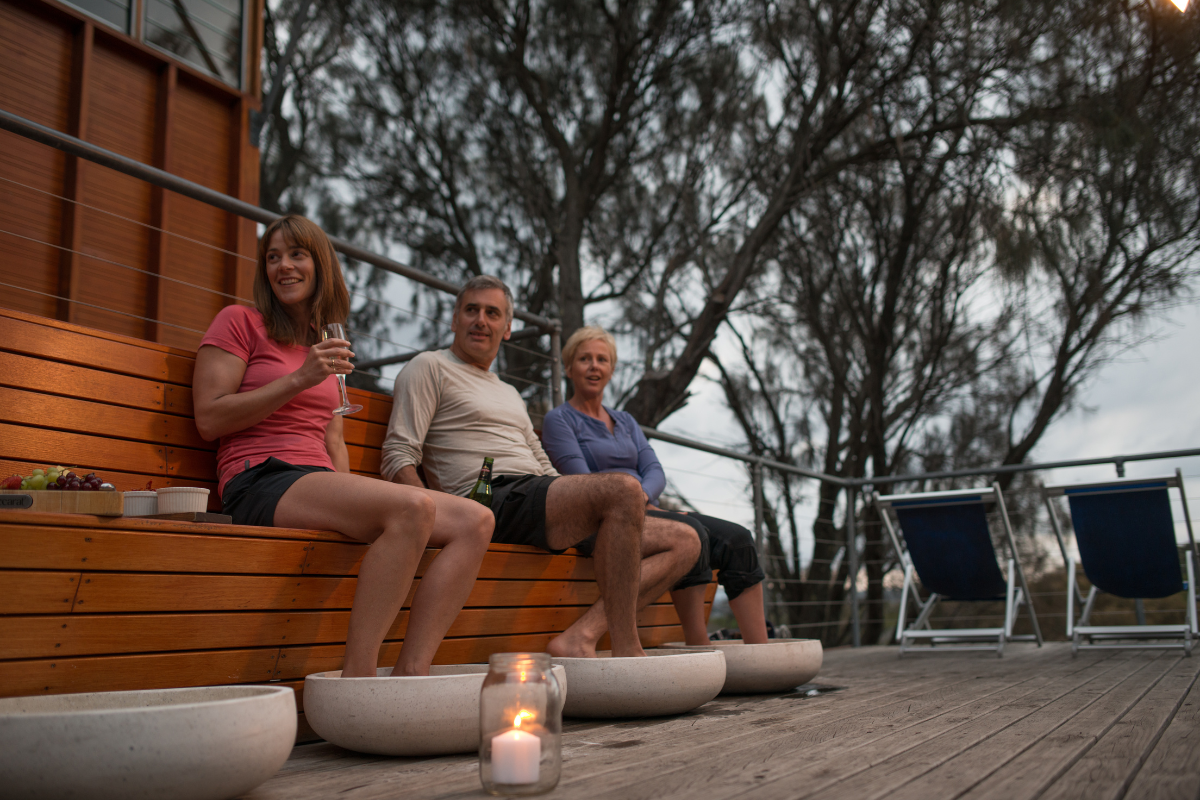
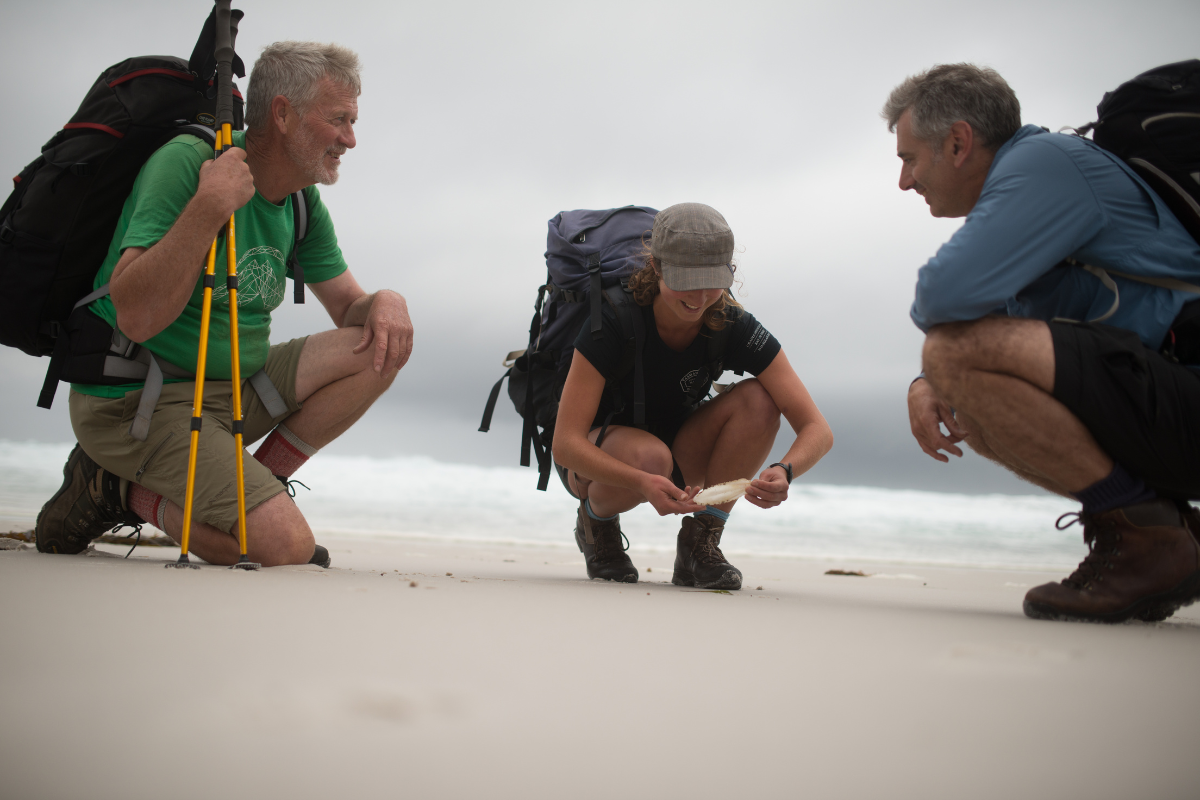
Lunch is in a protected beach cove, surrounded by native birds, rare shells, and marine artefacts. Guides begin unravelling the Bay of Fires story – its early inhabitants, visiting explorers, and how it came to bear its fiery name. After about four hours walking, Forester Beach Camp appears, tucked away in secluded dunes. These semi-permanent tents are home for the night. Local wine on the deck, a swim, or just exploring the dune swale while guides prepare Tasmanian fare.

Trade tip: The glamping-style camp is a point of difference. It’s not roughing it – but it’s deliberately closer to the landscape than a lodge. Clients who want something a bit more adventurous on the first night before the comfort of the award-winning Bay of Fires Lodge will appreciate the progression. The beach walking is genuinely easy – accessible to most fitness levels.

A striking white neoclassical boathouse structure stands on the shore of Lake St Clair in Tasmania, backed by a dense native eucalyptus forest. The serene waters reflect the clear blue sky, creating a picturesque scene of Australia's wilderness heritage.

Forester Beach Camp to Bay of Fires Lodge

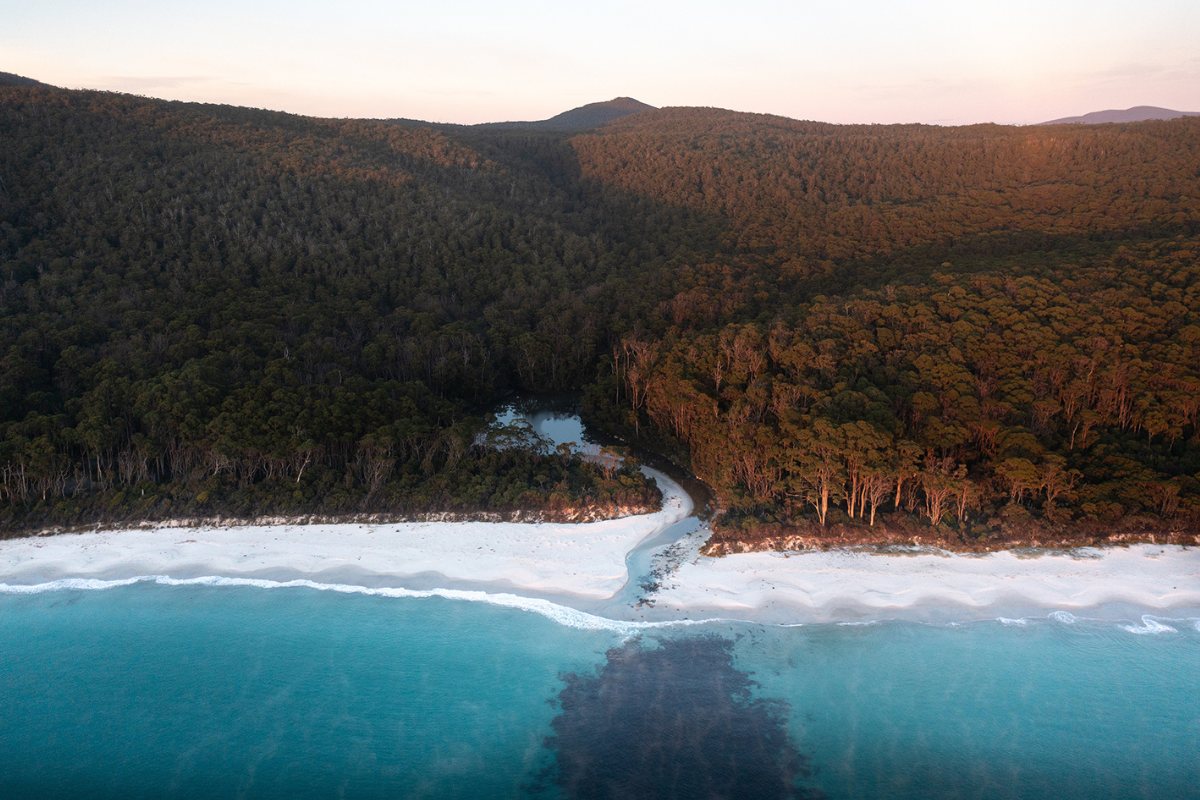
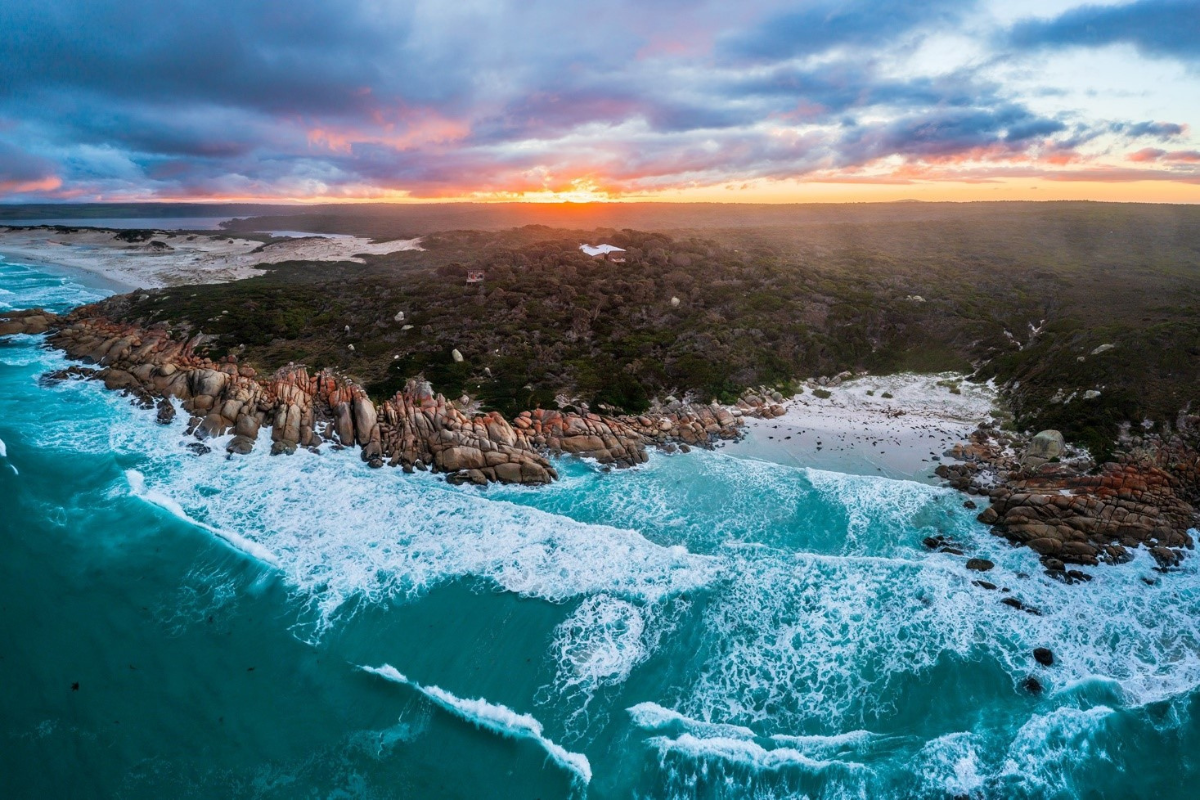
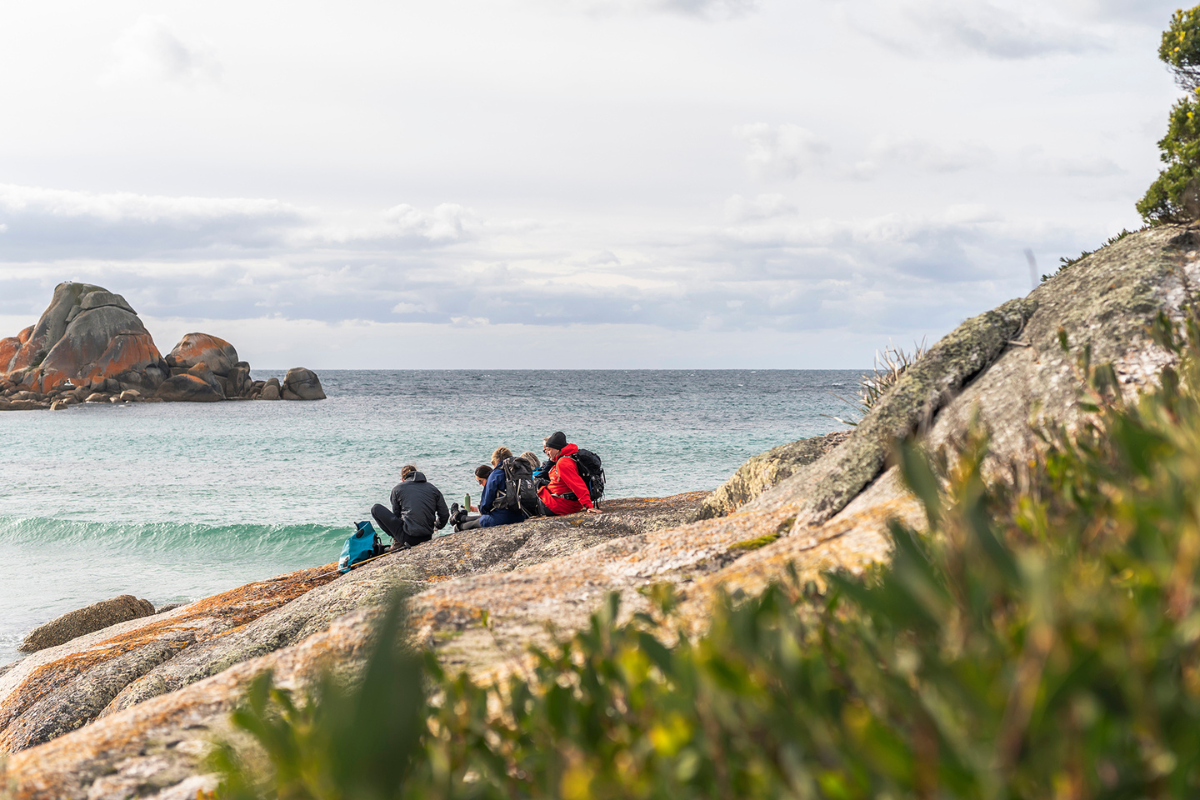
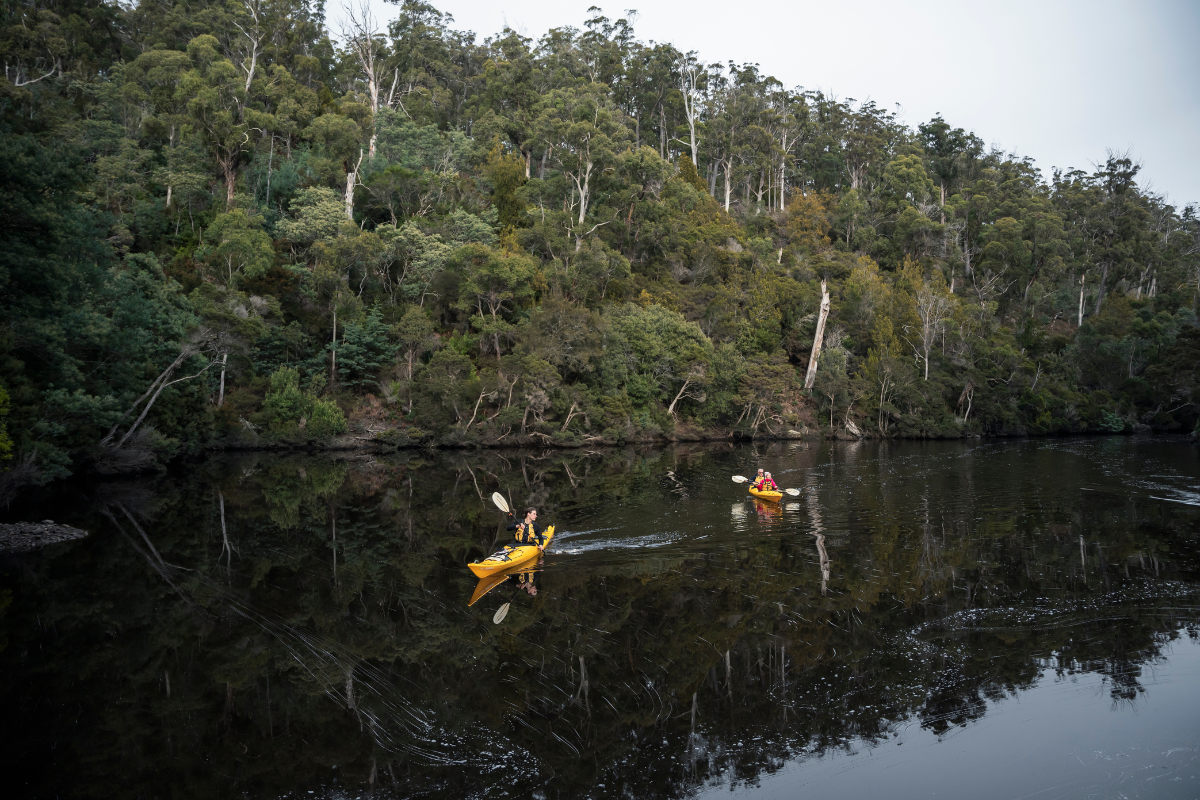
The walk continues along some of the most pristine coastline in Tasmania. Secluded coves, orange lichen-covered granite boulders (the signature of the Bay of Fires), and stretches of white sand that feel completely untouched. There’s kayaking on Ansons River for those who want it.

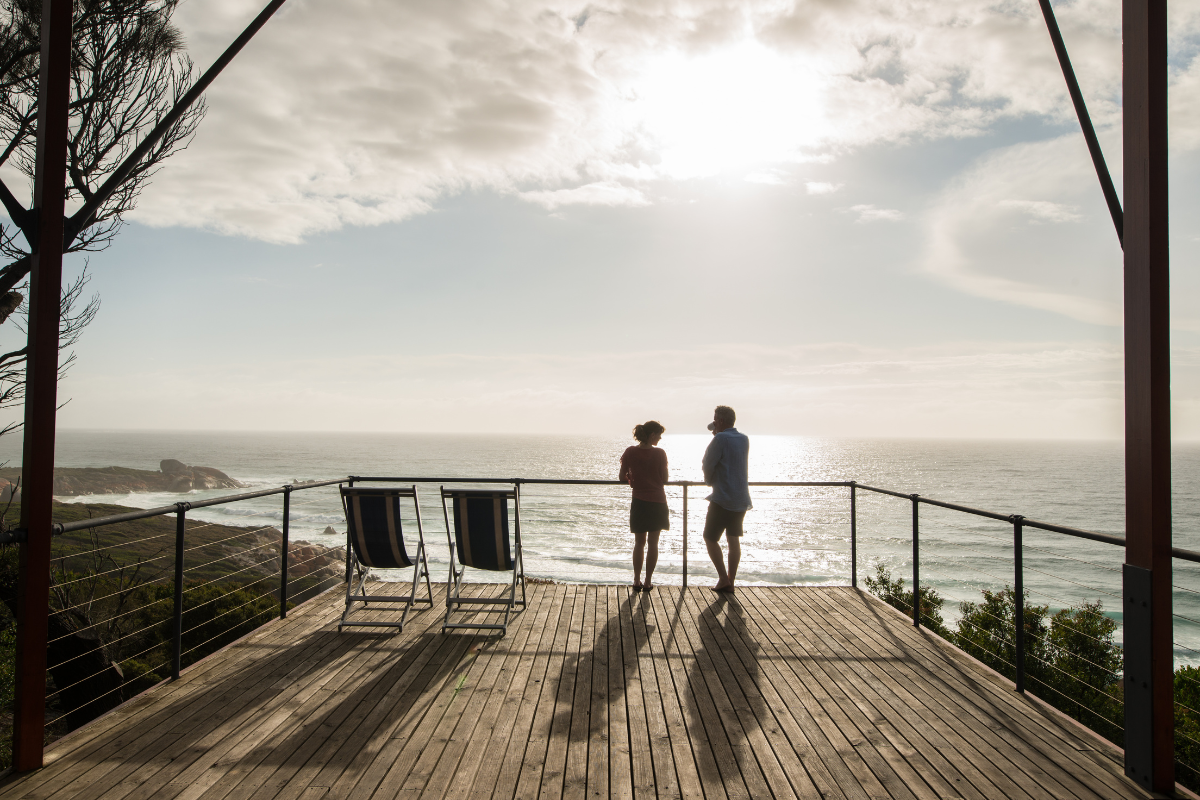
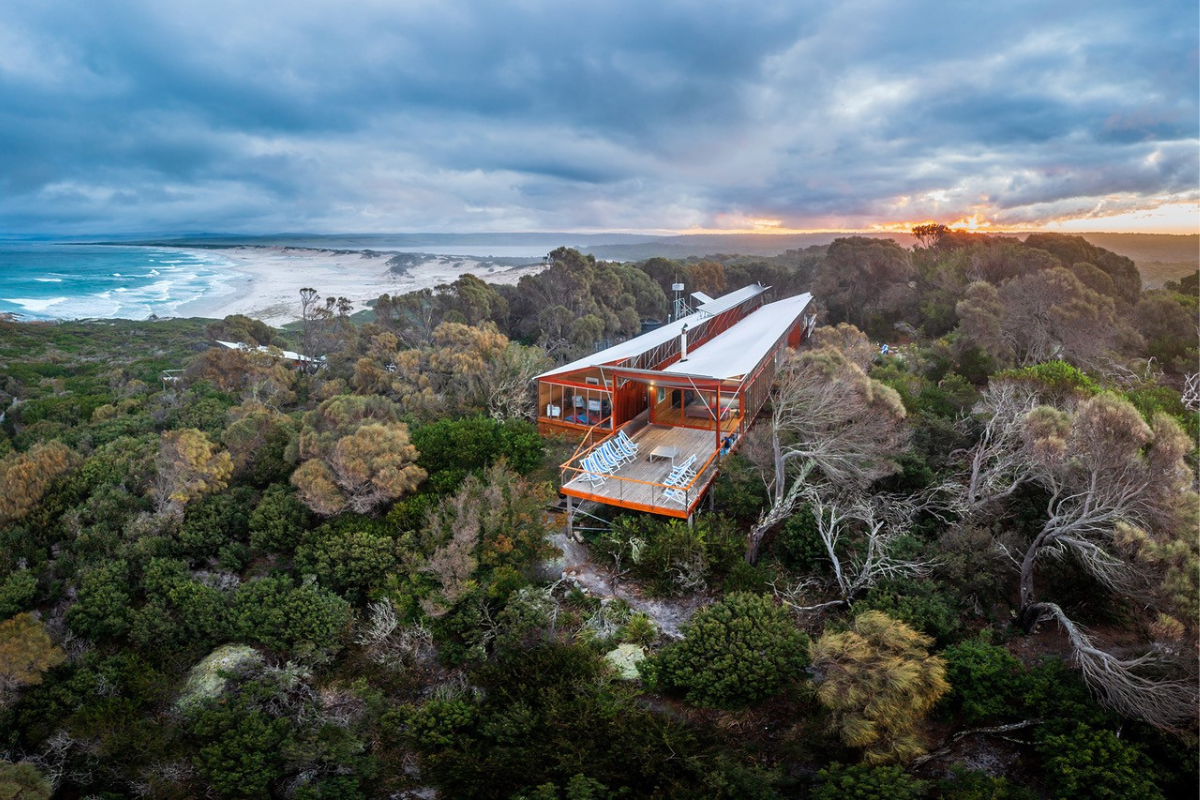
The destination is the award-winning Bay of Fires Lodge – a striking piece of architecture set into the landscape above the beach. It’s been designed to sit lightly on the land while offering genuine comfort. Two nights here.

Trade tip: Bay of Fires Lodge is the centrepiece of this walk. It’s won multiple awards and photographs brilliantly. The kayaking adds an active element beyond walking. For clients who enjoy coastal landscapes and beach walking more than mountain trekking, this is the walk to recommend over Cradle Mountain.

A stunning coastal landscape featuring distinctive orange and golden granite boulders scattered along the shoreline of the Bay of Fires Conservation Area in Tasmania, Australia. Crystal-clear blue waters and a pristine sandy beach complement the dramatic rocky formations under a clear sky.

Bay of Fires Lodge & Surrounds

A second day based at the lodge allows for deeper exploration of the Bay of Fires coastline. The guides lead walks to further beaches and coves, with opportunities for swimming, snorkelling, and wildlife spotting. The unique flora and fauna of the region are on full display – this is one of the most pristine environments Tasmania has to offer.

Back at the lodge, there’s time to simply sit and take it in. The uncomplicated luxury of the place is part of the appeal.

Trade tip: The second night at Bay of Fires Lodge is what lifts this from a walk into an experience. Clients have time to genuinely relax rather than just passing through. The setting is exceptional for small group dinners or incentive moments if you’re packaging this for corporate clients.

A stunning coastal landscape featuring pristine white sand beach, turquoise waters, and distinctive granite boulders covered in vibrant orange lichen at the Bay of Fires Conservation Area in Tasmania. The rocky foreground contrasts beautifully with the calm, clear waters and blue sky beyond.

Bay of Fires Lodge to Launceston

The final morning offers a last walk along the coast before departure. Return transfers to Launceston are included, with the drive passing through Tasmania’s scenic northeast.

Trade tip: The Bay of Fires walk finishes early enough in the day for clients to connect to afternoon flights from Launceston, or to continue south to Hobart for further touring. It pairs naturally with the Cradle Mountain walk (which also starts and finishes from Launceston) for clients with the time and appetite for both. A back-to-back booking of the two walks creates a comprehensive 12-day Tasmanian wilderness experience.

An iconic red and white steel arch bridge spanning the Cataract Gorge in Launceston, Tasmania, with the scenic First Basin visible below. The landscape features rocky outcrops, native vegetation, and distant mountain views under a partly cloudy sky.

WHAT’S INCLUDED

Inclusions & Gear

Cradle Mountain Inclusions

  • Return transfers between Launceston and Cradle Mountain / Lake St Clair
  • Pre-walk dinner and accommodation at Red Feather Inn
  • Twin-share accommodation in five private huts along the track
  • All meals and non-alcoholic beverages, plus Tasmanian wines
  • National Park and Overland Track passes
  • Boat transfer across Lake St Clair on Day 7
  • Use of a 50-litre backpack and Gore-Tex jacket for the walk
  • Sleeping bags, pillows, and comfortable mattress at each hut
  • Two qualified guides for the duration

Gear Provided

Clients don’t need to arrive with a garage full of hiking gear. The walks provide everything substantial, which makes them much easier to sell to international travellers who can’t pack bulky equipment. Guests are welcome to bring their own backpack and rain jacket if they prefer – these are assessed by guides on the morning of departure.

Any luggage not required on the walk can be stored and returned at the conclusion.

  • High-quality 50-litre backpack with pack cover and liner
  • Three-layer Gore-Tex rain jacket (weatherproof and breathable)
  • Sleeping sheet and pillowcase (sleeping bags provided in huts)
  • Lunch container, cutlery, and basic toiletries at each hut
  • Hut libraries with books, games, and field guides

Ready to Book Tasmania Walking Tours?

Get in touch with our team for trade rates, availability, and help packaging these walks into your clients’ Tasmanian and Australian itineraries. We handle pre- and post-walk accommodation, domestic flights, and connections to our full range of Australian and New Zealand touring product.

Frequently Asked Questions

The Cradle Mountain Signature Walk operates daily from October to May, with 4-day trips departing on selected dates during the same period. The Three Capes and Bay of Fires walks operate on a similar seasonal schedule. October to April is the core season, with the warmest and longest days falling between December and March. Tasmania’s weather can be changeable at any time of year – that’s part of its character. Snow is possible on the Overland Track even in summer at higher elevations. We recommend booking well in advance as departures fill quickly, particularly over the November to March peak.
It depends on the walk. The Cradle Mountain Signature Walk requires moderate fitness – the steepest section is on Day 2 (Waldheim to Barn Bluff), and the optional Mt Ossa summit on Day 5 is genuinely challenging. Guests should be comfortable walking 7 to 18 kilometres per day on uneven terrain including rock platforms, boardwalks, and muddy tracks. The Three Capes walk is moderate with some climbs to around 490 metres. The Bay of Fires walk is the most accessible – mostly beach and coastal walking at an easier pace. None of these require previous hiking experience, but clients should be honest about their fitness. The guides carry the heavy load, which makes a significant difference. Guests carry only a light daypack.
It depends on what they’re after. Cradle Mountain is the iconic one – World Heritage wilderness, alpine landscapes, ancient rainforest, and the most immersive multi-day experience (7 days). It suits clients who want a genuine adventure with real depth. Three Capes is dramatic coastal scenery – towering sea cliffs, Southern Ocean views, and comfortable lodges with spa treatments. It’s 4 days and works well for clients who want something shorter or who respond to coastal landscapes over mountains. Bay of Fires is the gentlest of the three – beach walking, pristine coastline, and the award-winning Bay of Fires Lodge. It suits clients who want active relaxation rather than a challenge. For clients with time, combining Cradle Mountain and Bay of Fires creates a comprehensive 12-day Tasmanian walking programme. Contact us and we’ll help match the right walk to the right client.
Yes. Small group incentives work particularly well with these walks – the intimate group sizes and shared experience create strong bonding moments. Private group bookings can be arranged across all three walks. For larger incentive programmes, we can coordinate multiple departure dates or combine the walks with other Tasmanian and Australian experiences. The lodges and huts are exclusive to walking guests, so the sense of privacy and exclusivity is built in. We’ve packaged these for corporate groups alongside Hobart-based dining experiences, whisky distillery visits, and MONA (Museum of Old and New Art). Contact us at enquiries@aabh.com.au to discuss group options.
Tasmania pairs naturally with a wide range of Australian destinations. Common combinations include Melbourne (a short flight across Bass Strait), Sydney, the Great Barrier Reef, and Uluru. For clients spending two to three weeks in Australia, adding a Tasmanian walking experience gives the itinerary a completely different texture – wilderness immersion and physical activity alongside the cities, beaches, and outback highlights. We build complete Australian itineraries for the travel trade, including flights, accommodation, touring, and transfers. Tasmania also connects well with our New Zealand product through New Zealand and Beyond Holidays for clients building trans-Tasman journeys. The walks work as a standalone Tasmanian trip or as a component of a longer Australian programme.
A stunning twilight view of Brisbane's modern city skyline reflecting in the Brisbane River, featuring the iconic Story Bridge, contemporary high-rise buildings illuminated against a vibrant purple and blue sky, with historic riverside landmarks in the foreground including a lighthouse and heritage structures.

WHY TRAVEL AGENTS CHOOSE

Australia and Beyond Holidays

  • Proven Local Expertise

    Led by industry veterans with senior experience at Qantas Holidays and Tour East Australia, and trusted by 500+ global travel agents with dedicated market support teams across Australia, India, Japan, and the Middle East.

  • Fast, Smart Itineraries

    Our HELiO booking platform delivers instant quotes and confirmations, streamlining the booking process for travel professionals.

  • Built For B2B Partners

    We work exclusively with travel trade partners, offering competitive net rates, marketing support, and dedicated account management.

  • Truly Tailor-Made Travel

    From FIT bookings to large-scale incentive groups, we craft bespoke itineraries that perfectly match your clients’ expectations.