
THE EXPERIENCE
A Day on the Peron Peninsula
Into Francois Peron National Park
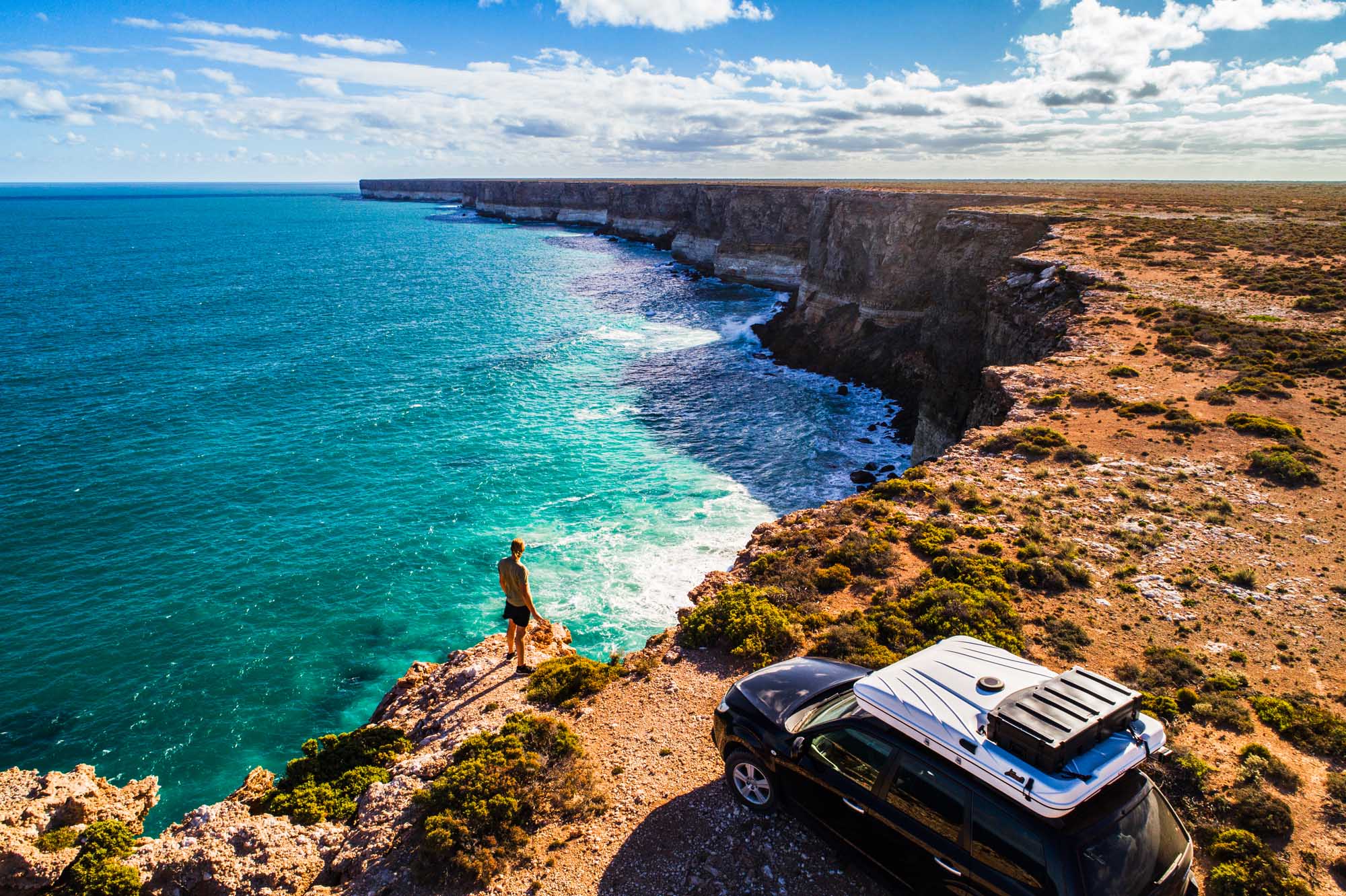
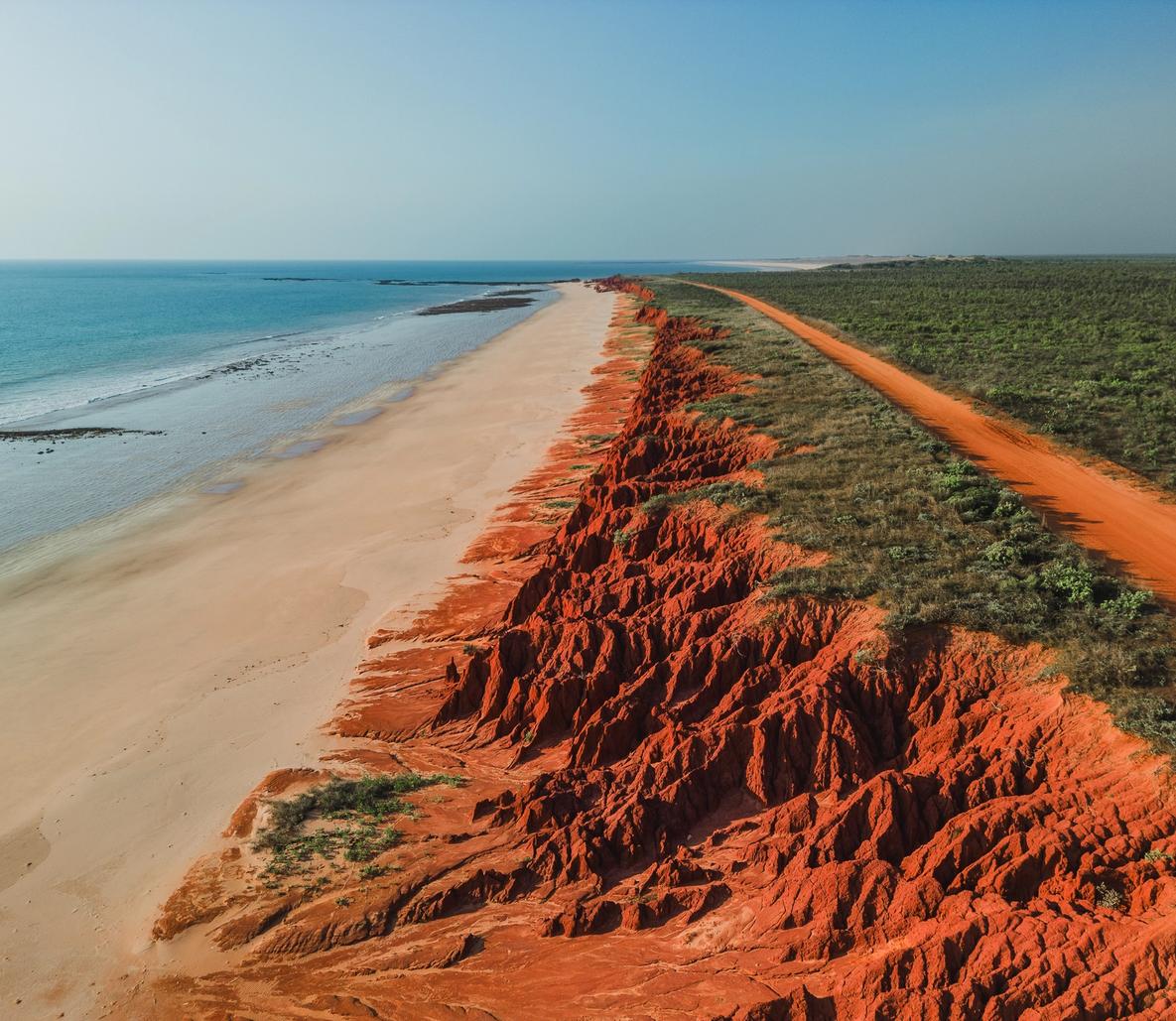
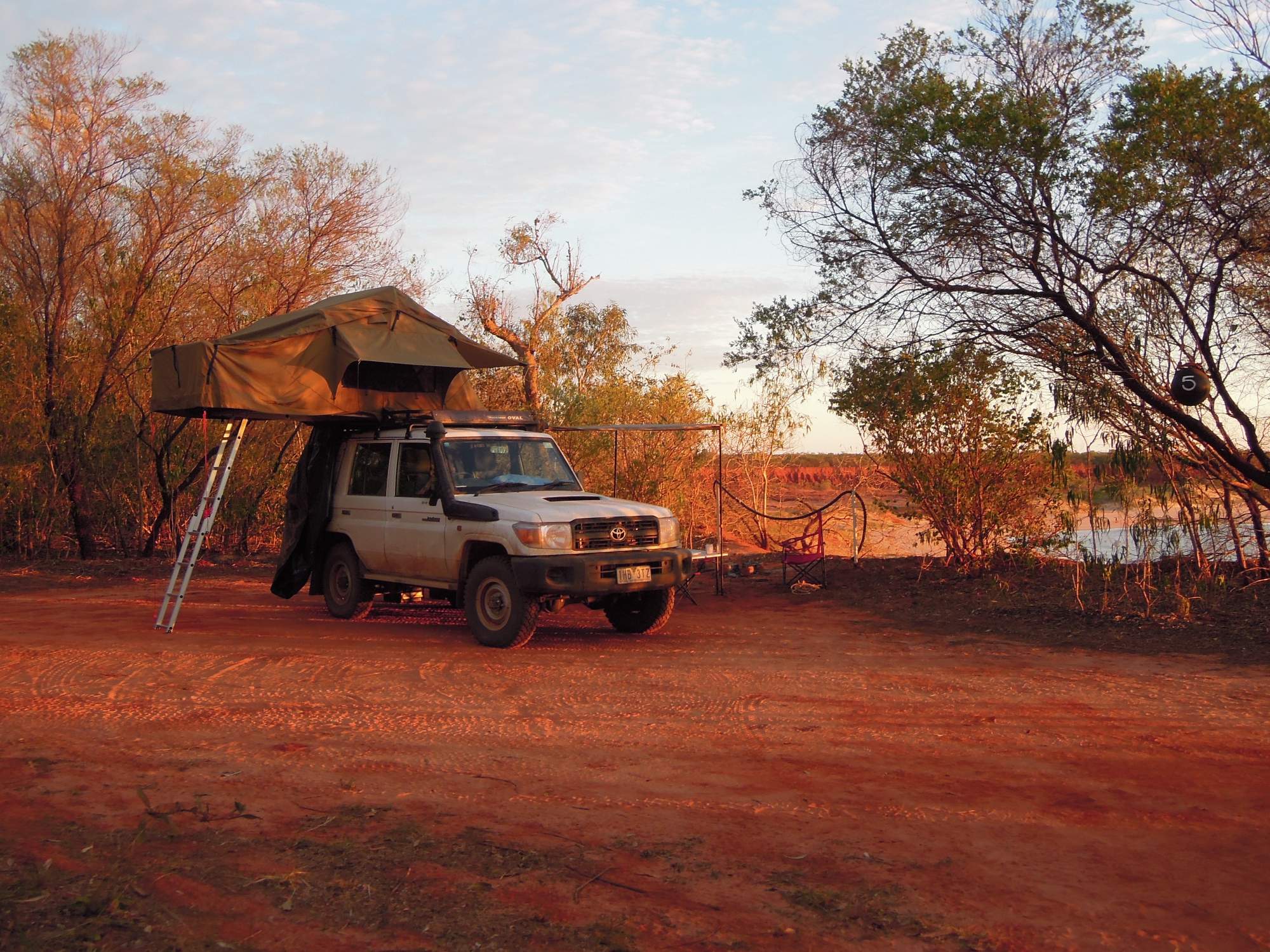
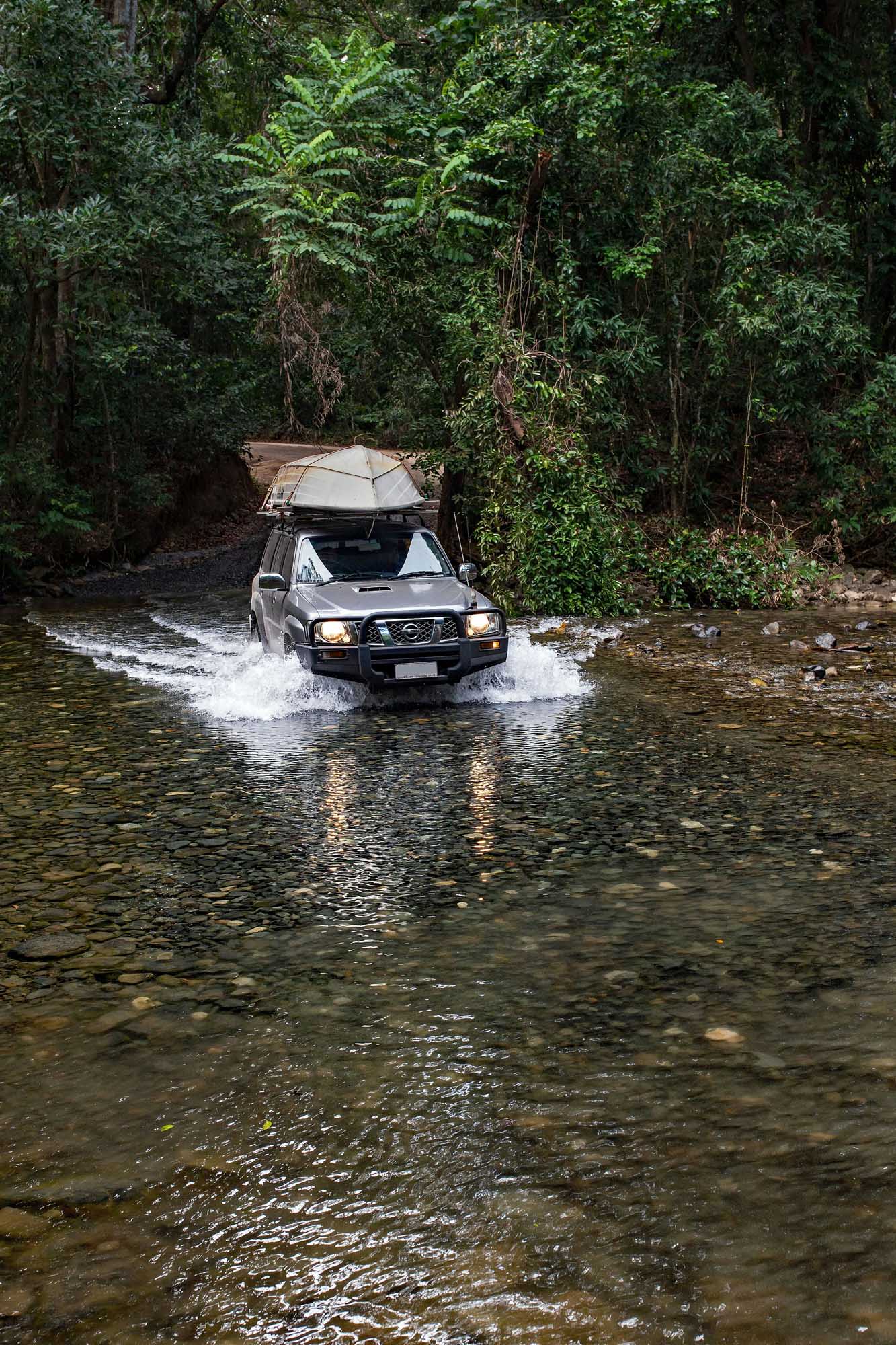
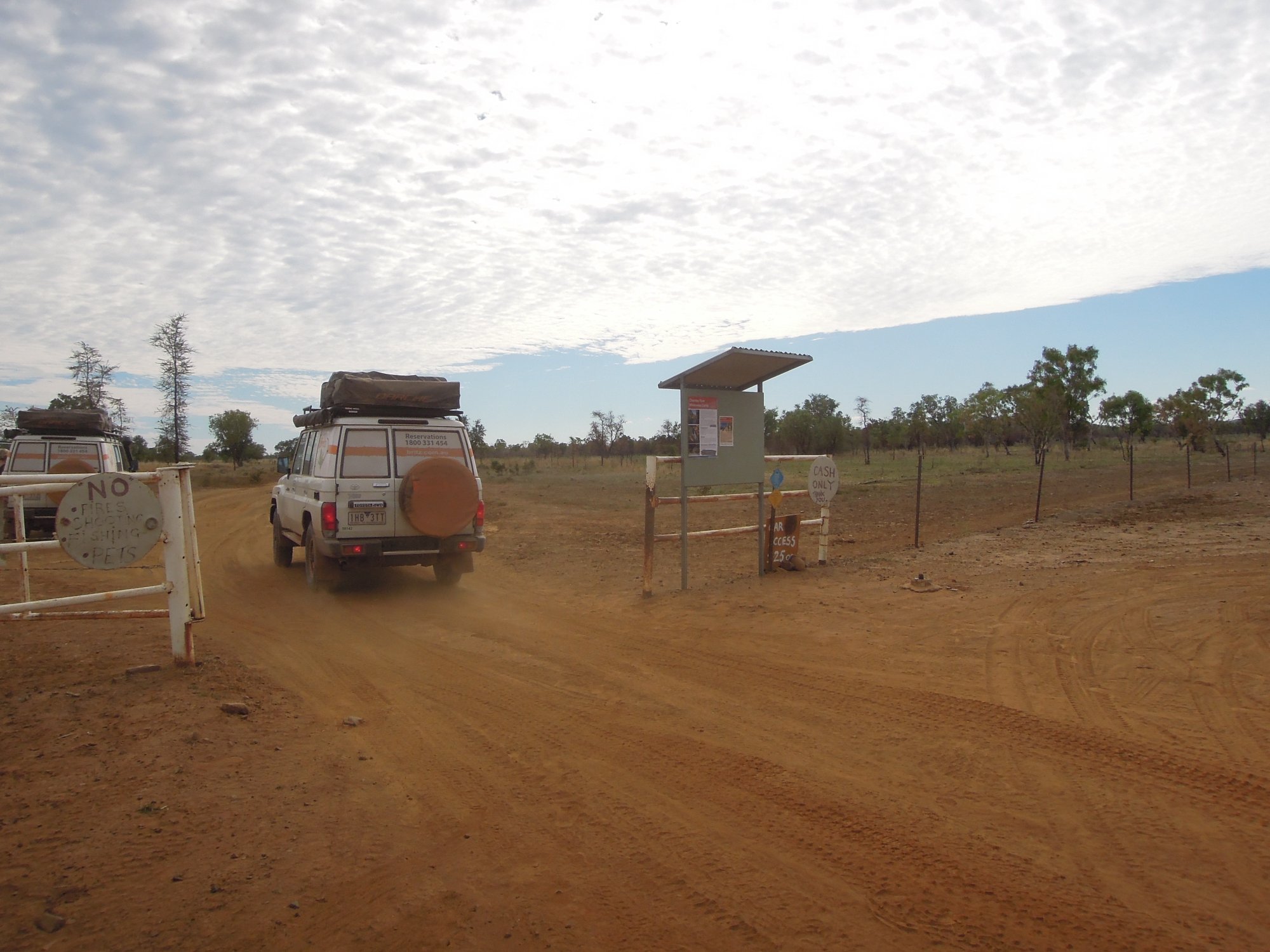
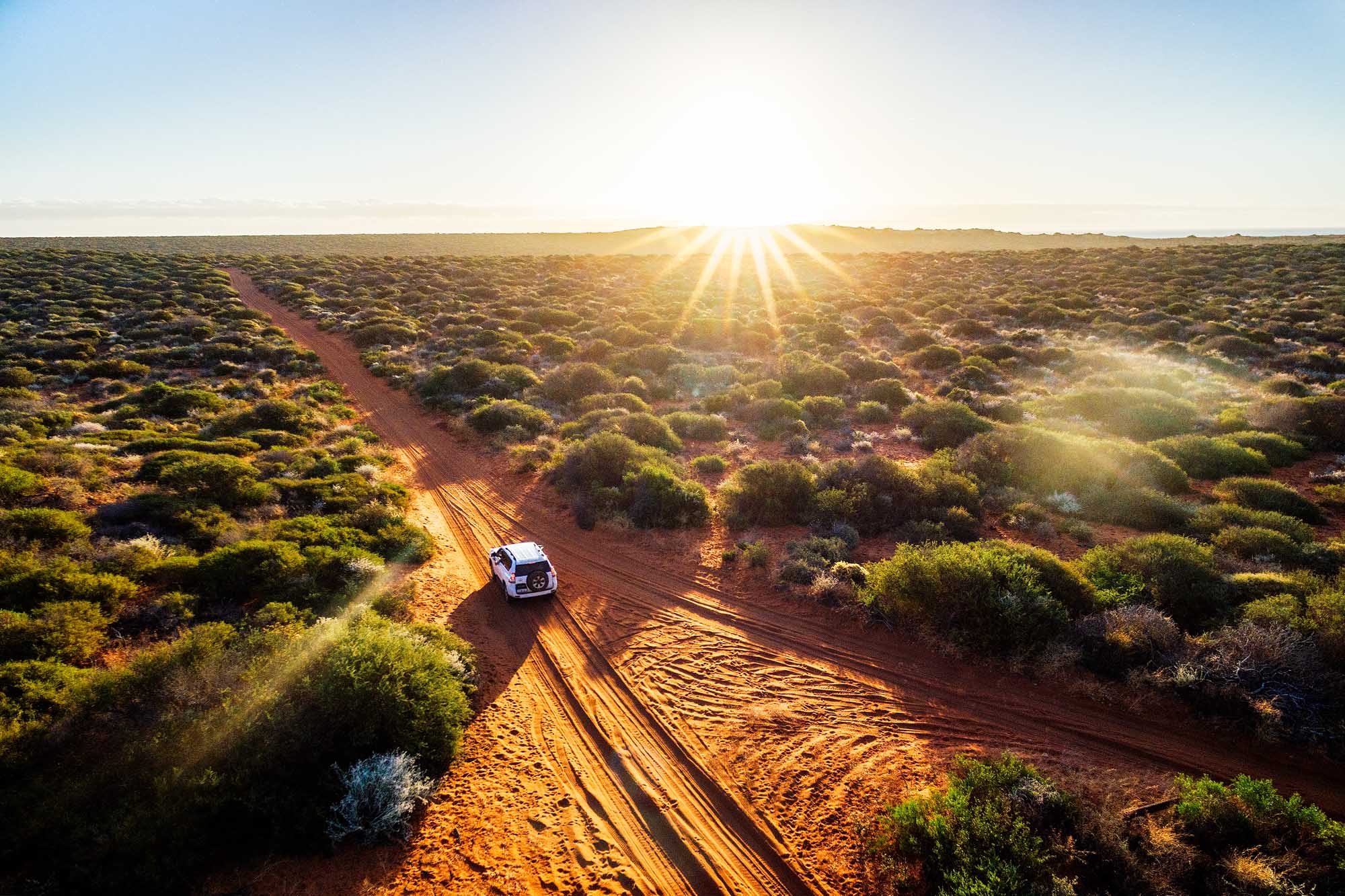
The tour heads north from the Denham area into Francois Peron National Park by 4WD – a necessity, since the park’s tracks are sand and corrugation only. No sealed roads. The drive itself becomes part of the experience as the landscape transforms from scrubby coastal heathland into the striking red pindan country that defines the peninsula.
The guides navigate routes that most self-drive visitors wouldn’t attempt, accessing remote sections of coastline and elevated lookouts well away from the main tracks. It’s an immersive way into the park, and the running commentary from the Nhanda and Malgana guides fills the journey with context about the land, its seasons, and the conservation work reshaping the peninsula.
Trade tip: Many international visitors won’t have their own 4WD, and rental 4WDs aren’t always suitable for these conditions. This guided tour removes the logistics entirely. For FIT clients staying in Denham or Monkey Mia, it’s a seamless full-day addition without needing to organise vehicle hire or worry about sand driving experience.
Skipjack Point & Point Peron
The lookout at Skipjack Point is one of those places where you stand on a red cliff edge and the water below is so clear it barely looks real. From the elevated vantage point, guests scan the shallows for turtles, sharks, rays, and – if luck is on their side – dugongs grazing on the seagrass beds. The guides know exactly where to look and when.
Point Peron sits at the tip of the peninsula where the Eastern and Western bays converge. The views stretch across both sides of Shark Bay simultaneously. It’s a powerful visual that makes the scale of the World Heritage Area tangible in a way that reading about it simply doesn’t.
The tour visits multiple scenic points throughout the day, each offering different perspectives on the coastline and the contrast between red earth and blue water. The guides choose locations based on tide, wind, and wildlife activity, so no two days run identically.
Trade tip: The lookout points are highly photogenic and produce the kind of images that work brilliantly in post-trip social media. For clients from Asian and European markets especially, the red-meets-blue landscape is visually unlike anything they’ve encountered before. It photographs better than it has any right to.
Endangered Species & the Peron Project
Shark Bay was one of Australia’s earliest major conservation success stories, and the guides bring this to life throughout the day. The peninsula has been subject to an intensive feral animal control programme – Project Eden – that’s allowed endangered native species to be reintroduced to their original habitat. The results are visible.
Guests look for thorny devil lizards, echidnas, kangaroos, and various reptile species as the tour moves through different habitat zones. Birdlife is prolific across the park. Marine wildlife is spotted from the clifftop lookouts: green and loggerhead turtles, dugongs, manta rays, and various shark species are all regularly sighted in the clear waters below.
Trade tip: The conservation angle resonates strongly with European and North American markets. For special interest groups focused on ecology or wildlife, this tour delivers genuine substance beyond the visual appeal. The guides can go deep on the science if the audience is interested, or keep it conversational for general travellers.
Nhanda & Malgana Knowledge
The Aboriginal cultural component isn’t a performance. It’s woven into the tour naturally. The Nhanda and Malgana guides share knowledge about bush tucker plants, traditional land management, and the deep connection between the local people and this landscape as the day unfolds. It comes up when it’s relevant – walking past a plant with medicinal uses, or pausing at a spot with cultural significance.
Long before Shark Bay received its World Heritage listing, Aboriginal people were looking after this country. The guides communicate that continuity without sentimentality. It adds a layer to the experience that a non-Indigenous guide simply couldn’t provide.
Trade tip: Authentic Aboriginal tourism experiences are increasingly sought after by international travellers, particularly from the UK, Europe, and North American markets. This isn’t a separate cultural add-on – it’s integrated into the full-day tour, which makes it feel genuine rather than staged. That distinction matters when your clients are discerning travellers.
Meals on the Sand
The tour is fully catered, with meals served at scenic beach locations or lookout spots chosen by the guides on the day. It’s homestyle cooking – hearty and fresh – laid out in settings that most restaurants would charge a premium to replicate. Eating lunch on a remote beach with red sand behind you and turquoise water in front is not something your clients will forget quickly.
Weather permitting, guests can swim in sheltered bays along the coast. The water is warm, clear, and calm in the protected inlets. It breaks up the day and gives the tour a relaxed feel rather than a relentless schedule of stops.
Trade tip: The beach catering is a genuine differentiator. It transforms a day tour into something that feels more like a private experience. Mention it in your sales pitch – it’s the kind of detail that moves a client from “maybe” to “yes.” The swimming option is seasonal and weather-dependent, so manage expectations accordingly.
The Natural Hot Tub Finish
The tour wraps up at the historic Peron Homestead, a former pastoral station that now serves as a park information point. The highlight here is the artesian bore-fed hot tub – naturally heated water that guests can soak in after a full day of 4WD touring, walking, and beach exploration.
It’s an unexpectedly luxurious ending to an outback adventure. The warm water, the late afternoon light, and the quiet of the peninsula combine into something genuinely restorative. It’s also a great photo opportunity.
Trade tip: The hot tub finish is a nice narrative arc for the day – it gives the experience a clear beginning, middle, and satisfying end. Clients remember it. Worth flagging in your itinerary descriptions because it adds a comfort element to what might otherwise sound like a rugged outback tour.
WHAT’S INCLUDED